What Are African Elephants?
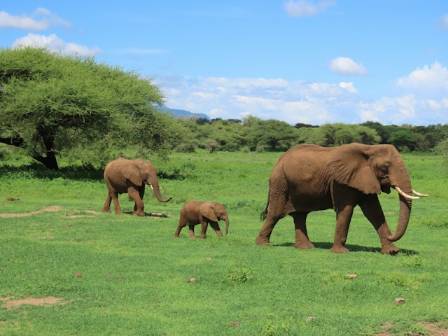
African elephants are the largest land animals on Earth. They are generally larger than Asian elephants and can be easily recognized by their enormous ears, which resemble the shape of the African continent. In comparison, Asian elephants have smaller and more rounded ears.
For many years, scientists considered all African elephants to belong to a single species. However, research has shown that there are actually two distinct species: the African savanna elephant and the African forest elephant.
Savanna elephants are larger and mainly inhabit the open grasslands and plains of sub-Saharan Africa. Forest elephants are smaller and live in the dense forests of Central and West Africa.
Both species face serious conservation challenges. The International Union for Conservation of Nature (IUCN) classifies African savanna elephants as endangered and African forest elephants as critically endangered.
African elephants are also considered keystone species, meaning they have a major influence on the environments where they live. They are often called “ecosystem engineers” because their activities reshape habitats and benefit many other species.
During dry periods, elephants use their powerful tusks to dig into dry riverbeds and create water sources that can be used by many animals. Their dung contains undigested seeds, helping plants spread and supporting new vegetation growth. In forests, elephants create pathways by moving through dense plants, while in savannas they prevent excessive tree growth by feeding on young trees and shrubs, helping maintain open grassland habitats.
Trunks and Tusks: Tools for Survival
African elephants rely on their large ears to release body heat and regulate temperature. However, in the intense African climate, they often need additional ways to cool themselves.
Elephants are strongly associated with water. They use their trunks to collect water and spray it over their bodies like a natural shower. After bathing, they frequently cover their skin with a layer of dust, which helps provide protection from the sun and insects.
An elephant’s trunk is actually a highly specialized nose and upper lip combined into one powerful structure. It is used for breathing, smelling, producing sounds, drinking, and collecting food.
The trunk contains approximately 40,000 muscles, allowing elephants to perform extremely precise movements. African elephants have two finger-like extensions at the tip of their trunks, which help them pick up small objects and handle food. Asian elephants have only one such extension.
Both male and female African elephants grow tusks, which are modified continuously growing teeth. Savanna elephants usually have curved tusks, while forest elephants typically have straighter ones.
Elephants use their tusks for many purposes, including digging for water, searching for food, removing tree bark, and defending themselves. Male elephants often have larger tusks, which they may use during competition with other males.
Diet and Daily Life
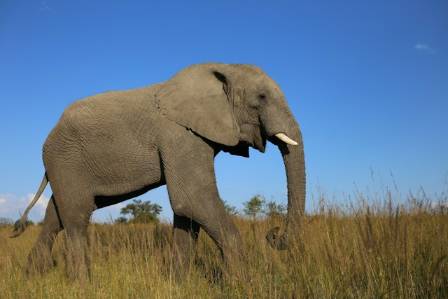
African elephants are herbivores that consume a wide variety of plant materials, including grasses, roots, fruits, and tree bark.
Because of their enormous body size, they require huge amounts of food. A fully grown elephant may eat as much as 300 pounds of vegetation in a single day.
To meet these nutritional demands, elephants spend much of their time traveling across large areas while searching for enough food to support their bodies.
African elephants are found in many different habitats, including the savannas of sub-Saharan Africa and the rainforests of Central and West Africa.
The northernmost elephant populations live in Mali’s Sahel Desert. These elephants survive in harsh conditions by following circular migration routes in search of limited water resources.
Because elephants require such large amounts of food, they sometimes come into conflict with humans. A single elephant may destroy an entire season of crops overnight. Conservation programs often work with farmers by developing methods to protect crops and reduce human-elephant conflicts.
Family Groups and Social Behavior
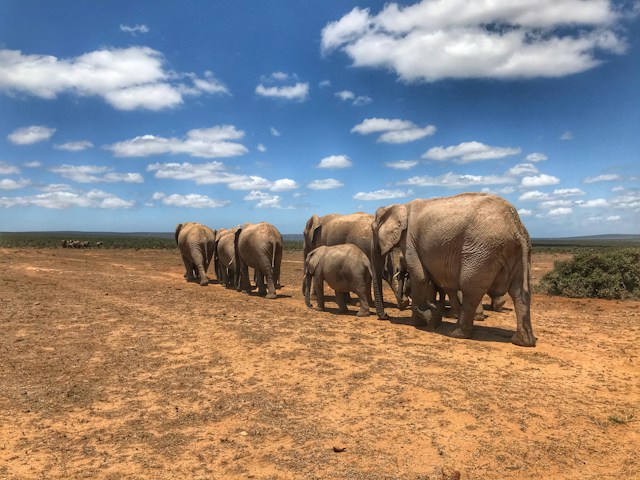
African elephants live in highly organized social groups led by females. These groups are known as matriarchal societies.
The herd is usually guided by the oldest and most experienced female, called the matriarch. She leads a family group consisting of related females, known as cows, and their young calves.
Adult males, called bulls, usually leave these family groups when they mature. They often live independently or form smaller groups with other males.
Elephant reproduction requires a long-term commitment. Female elephants have the longest pregnancy period of any mammal, lasting almost 22 months.
Normally, a female gives birth to one calf every two to four years. Newborn calves are already large at birth, weighing around 200 pounds and standing approximately three feet tall.
Threats to African Elephant Survival
The greatest danger facing African elephants is illegal hunting for the ivory trade.
Before large-scale European colonization, Africa may have supported millions of elephants. However, decades of hunting and ivory poaching caused dramatic population declines. By the late 20th century, elephant numbers had fallen significantly.
Poaching continues to threaten both species today. African savanna elephant populations have declined significantly in recent decades, while forest elephants have experienced even greater losses due to intensified illegal hunting.
In 2021, the IUCN officially recognized African savanna elephants and African forest elephants as separate species, listing them as endangered and critically endangered respectively. Current estimates suggest that only around 400,000 African elephants remain.
Another challenge is their slow reproduction rate. Because elephants reproduce slowly, with population growth rates around 5–6 percent, births cannot quickly replace individuals lost through poaching.
Habitat destruction is also a major problem. As human populations expand and forests and grasslands are converted for agriculture and development, elephants lose access to feeding areas, water sources, and migration routes. This also increases conflicts between elephants and local communities.
Conservation Efforts
Recognizing African elephants as two separate species has helped conservation efforts by highlighting the different challenges faced by savanna and forest elephants.
Scientists hope this distinction will bring greater attention to forest elephants, which historically received less conservation focus compared with the more familiar savanna elephant.
African elephants receive legal protection across many countries within their natural range and are also protected through international agreements such as CITES and the Convention on Migratory Species.
Conservation organizations and governments have created protected areas and wildlife corridors to connect habitats. However, researchers estimate that a large proportion of elephant habitats still remain outside protected zones.
Stopping illegal ivory trade remains one of the most important conservation goals. Efforts include reducing poaching activities and decreasing consumer demand for ivory products.
Some countries have introduced stronger ivory restrictions. For example, China implemented a near-complete domestic ivory trade ban in 2015, which contributed to declining public demand for ivory.
Protecting elephants also requires supporting nearby human communities. Research has shown that areas with higher poverty and corruption often experience greater levels of elephant poaching. Improving sustainable livelihoods for local people can help reduce dependence on illegal wildlife exploitation.