Wire dispatch
Understanding the Blue Jellyfish: A Guide to Its Anatomy and Life Cycle
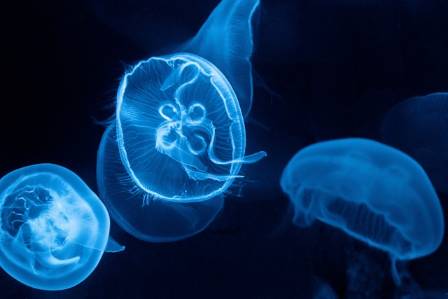
A vibrant electric blue form floating near the shore is frequently a blue jellyfish, a striking invertebrate common to the North Atlantic. While their name suggests otherwise, these organisms are not fish; they are a type of plankton that drifts with the waves and wind.
Sean O’Neal
Wire note
Signal tip
The full dispatch write-up continues below on the discovery terminal.
Channel
Discovery Wire
A vibrant electric blue form floating near the shore is frequently a blue jellyfish, a striking invertebrate common to the North Atlantic. While their name suggests otherwise, these organisms are not fish; they are a type of plankton that drifts with the waves and wind.
Defining the Blue Jellyfish
The blue jellyfish, scientifically known as Cyanea lamarckii, is identified by a translucent bell that usually appears in shades of violet or light blue. This dome-shaped body can reach a diameter of approximately 12 inches (30 cm). Extending from beneath the bell are specialized mouth arms and stinging tentacles used for capturing food. Predominantly found in the Northern Hemisphere, these creatures are composed mostly of water, making them highly effective drifters across the ocean.
Biological Structure and Physical Functions
Despite their complex behaviors, blue jellyfish lack eyes, bones, and a brain. They navigate using a "nerve net" that reacts to light and physical contact. The bell acts as a pump for vertical movement, while the tentacles utilize venom to paralyze prey, including plankton, small fish, and worms. Once caught, food is moved to the mouth by oral arms and processed in a central cavity where nutrients are absorbed.
Development and Reproductive Stages
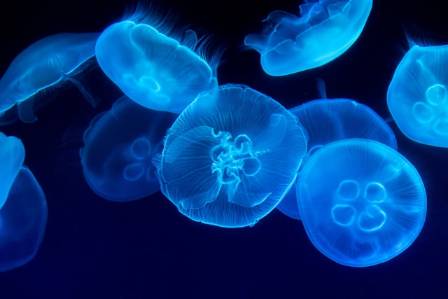
The life of a blue jellyfish begins as an egg, which is typically fertilized in the open water. These develop into larvae that attach to surfaces and grow into polyps. Young jellyfish eventually bud off from these polyps; though initially colorless, they develop their distinctive blue hue as they mature to provide camouflage in open waters. This cycle is highly seasonal, with major blooms often appearing in July.
Diet and Role in the Food Web
Blue jellyfish are opportunistic hunters that feed on a variety of small marine life, including other jellyfish. Simultaneously, they serve as a critical food source for larger predators such as fish and birds. In a unique symbiotic interaction, some small fish seek shelter among the jellyfish's stinging tentacles to hide from their own predators.
Interactions with People and Common Misidentifications
During the summer, strong winds frequently wash blue jellyfish onto beaches. While their sting is generally not fatal to humans, it can result in skin irritation, redness, and swelling. Experts recommend rinsing a sting with seawater rather than rubbing it, and advise against touching even dead-looking jellyfish as their tentacles can still discharge venom.
These jellyfish are often confused with other blue marine life, such as "blue buttons" or "by-the-wind sailors". Unlike the solitary blue jellyfish, these lookalikes are colonial organisms that utilize gas-filled chambers or "sails" to stay afloat.
Movement and Survival Tactics
The survival of the blue jellyfish is tied to its ability to drift. Because they cannot swim against horizontal currents, their location is determined by the sea and wind. Their populations can fluctuate wildly, with some years producing massive blooms and others very few, depending on water temperature, light levels, and the availability of prey.
Fascinating Blue Jellyfish Facts
-
These invertebrates are closely related to corals and sea anemones.
-
Their bodies are composed of over 95% water.
-
The primary purpose of their sting is to paralyze prey, not to attack humans.
-
Their blue coloration provides defensive camouflage from predators both above and below the surface.
-
While they lack the ability to think or see, they are highly successful survivors in their environment.
More on the wire
LOG · en

The Best Off-Road Pickup Trucks to Buy for Your Adventurous Side
These tough, factory-built trucks are ready to take on challenging terrains like rocks, dirt, sand, and rugged trails.
LOG · en

The 10 Greatest Basketball Players of All Time
The list reflects the author’s personal take—after decades of watching and debating sports—on the top ten basketball players ever. It acknowledges how subjective such rankings are.
LOG · en
The World's 17 Most Lavish Ingredients
Indulge in a culinary journey through the world's most opulent and extravagant ingredients. These culinary gems are a testament to the heights of gastronomic luxury, far beyond your average grocery bill.
LOG · en

8 of the Best Coastal Sand Dunes You Need to Explore in California
California’s coastline is dotted with sand dunes that offer both adventure and natural beauty. From wide open spaces for play to delicate habitats teeming with plants and wildlife, these dunes provide something for every type of explorer.
LOG · en

10 Iconic Manhattan Landmarks You Need to See
Manhattan, the bustling core of New York City, is packed with legendary buildings that showcase the city’s cultural, architectural, and historical significance. From soaring skyscrapers to renowned concert halls, these structures are as much symbols of the Big Apple as the Statue of Liberty. Here are ten of the most famous landmarks worth exploring.
LOG · en

Most Beautiful Depictions of Harvest in Art
Here in Wales, the leaves are turning and beginning to drift from the trees. The final fruits and vegetables have been gathered, and the evenings are growing longer and darker. According to the pagan calendar, the Autumn Equinox and Samhain are now behind us. It is an ideal time to reflect on the year’s harvest—whether in a literal, spiritual, or emotional sense. Here are several renowned artworks celebrating the harvest to inspire you.