Wire dispatch
Underwater robots
Robust Object Detection for Underwater Robots via Domain Generalization.
Quinn Ellis
Wire note
Signal tip
The full dispatch write-up continues below on the discovery terminal.
Channel
Discovery Wire
Robust Object Detection for Underwater Robots via Domain Generalization.
Overview
Object detection combines the tasks of identifying what an object is and where it is located. Underwater environments, however, introduce unique difficulties for detection systems. Common challenges include occlusion, camouflage, domain shift, and reduced visibility. This study focuses on developing robust object detection methods specifically designed for underwater robotic systems.
Plain-Language Summary
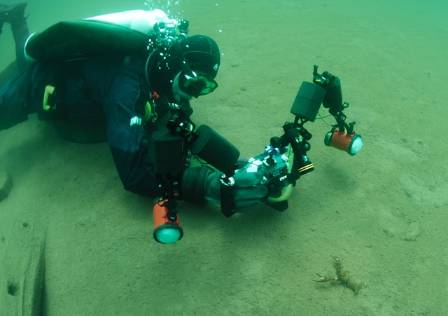
The underwater world is notoriously difficult for machines to interpret visually. Imagine trying to spot a fish hiding behind others, blending into coral, or swimming through murky, tinted waters. Underwater robots face this challenge constantly, whether they are monitoring fish farms, studying marine life, or collecting seafood.
The researchers identify four key obstacles for underwater object detection. First, marine animals often cluster together, making it hard to distinguish individuals. Second, many species have evolved camouflage to match their environment. Third, water changes the appearance of objects, often casting a blue or green tint that confuses models trained on regular above-water images. Finally, movement through water stirs up sediment and generates motion blur, further reducing clarity.
Think of it as finding a friend in a well-lit shopping mall versus in a dark, crowded nightclub with fog machines. The friend is the same, but the environment makes recognition far more difficult.
This paper proposes a detection system designed to overcome these challenges, giving underwater robots more reliable “eyes” in difficult conditions.
Key Findings
The study addresses several major underwater detection problems:
Occlusion: Overlapping animals make standard systems fail. The research develops methods to improve detection in crowded underwater scenes.
Camouflage: Detecting animals that blend into their surroundings is challenging. The system uses techniques to highlight subtle differences between objects and background.
Domain shift: Underwater color casts and distortions reduce accuracy. Image enhancement and domain adaptation methods allow the system to generalize to varying water conditions.
Turbidity and motion blur: Strategies like integrating information across multiple frames increase the signal-to-noise ratio, improving visibility in murky conditions.
The paper also outlines how these improvements can be implemented on robots with limited computing resources.
Technical Approach
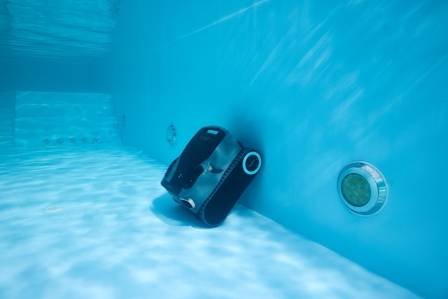
The researchers analyze how conventional object detection architectures fail underwater. To address occlusion, they introduce advanced non-maximum suppression methods that distinguish overlapping targets. For camouflage, the system extracts fine-grained texture and edge features that traditional convolutional networks might miss.
Domain shift is handled with a two-step approach: first, preprocessing corrects color and contrast; second, domain adaptation techniques allow the detector to generalize across diverse underwater settings. To tackle turbidity and motion blur, the system integrates temporal information from multiple frames, enhancing detection performance compared to single-frame methods.
The architecture is optimized for real-time operation on robots with constrained processing power, and image enhancement effects are evaluated across different water types and visibility levels.
Critical Analysis
While promising, the system has limitations. Test environments may not represent all underwater conditions worldwide. Tropical reefs, kelp forests, and polar waters present unique visual challenges.
The focus is mainly on detection accuracy, not energy efficiency. Robots have limited power, so a highly accurate but energy-intensive system could be impractical. The system also needs evaluation on previously unseen species, as biodiversity underwater is vast.
Standardized benchmark datasets are lacking, making comparisons with other methods difficult. Additionally, integration with higher-level robotic decision-making systems is not fully addressed—detection is only one part of a complete robotic perception-action loop.
Conclusion
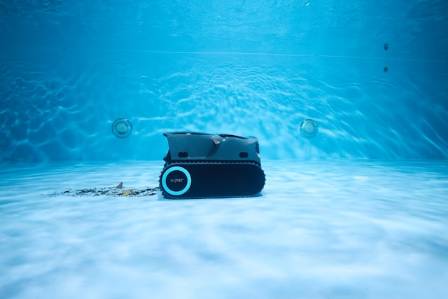
Underwater object detection requires specialized solutions beyond standard computer vision. This research advances the field by addressing occlusion, camouflage, domain shift, and turbidity, providing reliable detection in challenging conditions.
Applications extend to marine industries like aquaculture, environmental monitoring, and fisheries management, improving efficiency and sustainability. The technology also supports scientific research, underwater archaeology, infrastructure inspection, and search-and-rescue operations.
Future work should aim to improve robustness under extreme conditions, reduce energy consumption, and detect previously unseen objects. With continued development, underwater robots equipped with advanced vision systems may soon become essential tools for ocean exploration and management.
More on the wire
LOG · en

The most beautiful and useful kettles
A new kettle is probably somewhere on your wish list. Ideally, you want one that does its job well without becoming an eyesore in your carefully styled kitchen. We searched for kettles that combine practical function with attractive design, making them excellent choices for your own home or thoughtful gifts for a birthday, Christmas Eve, or a present beneath the tree.
LOG · en

A Brief History of Tall Structures: The Evolution of Modern Skyscrapers
From the ancient Tower of Babel to the iconic Burj Khalifa, humanity's desire to reach greater heights has always been a powerful driving force. Over the centuries, we have raised towering structures to celebrate our culture, showcase our cities, or simply exhibit our engineering prowess.
LOG · en

Demystifying Audi: Is it a True Luxury Car Brand? (2023)
Welcome to the intriguing conundrum: Is Audi genuinely a luxury car brand, or is it merely a matter of perception?
LOG · en

Easy Protein Breakfast Bowl
Looking for a nutritious breakfast packed with protein? This simple Protein Breakfast Bowl is exactly what you need. Made with Greek yogurt and oats, it requires only a few ingredients and takes just a couple of minutes to prepare. There’s no cooking involved, making it a perfect option for busy mornings.
LOG · en

8 Oldest Lighthouse in the World
Before permanent lighthouses were constructed, fires set on hilltops guided sailors at sea. To enhance visibility, platforms were erected to elevate these fires, which eventually led to the emergence of lighthouses. Unlike modern ones that serve as navigational warnings, ancient towers primarily marked harbor entrances.
LOG · en
Whales: Ancient Sages of the Deep
Whales are frequently regarded as the sentinels of the sea and timeless vessels of ancestral knowledge. Living for generations, their presence echoes themes of endurance, continuity, and deep insight.