Wire dispatch
Undiscovered architecture: remarkable buildings
Architecture is not always the first thing that comes to mind when people think about reasons to visit Europe’s best-known cities. Beyond the famous landmarks that have become synonymous with destinations across the continent, however, there are countless lesser-known structures that offer remarkable examples of creativity and design.
Selina Voss
Wire note
Signal tip
The full dispatch write-up continues below on the discovery terminal.
Channel
Discovery Wire
Architecture is not always the first thing that comes to mind when people think about reasons to visit Europe’s best-known cities. Beyond the famous landmarks that have become synonymous with destinations across the continent, however, there are countless lesser-known structures that offer remarkable examples of creativity and design.
For travelers willing to move slightly beyond the usual tourist routes, these hidden architectural treasures can provide some of the most memorable discoveries. Of course, posing beside the Leaning Tower of Pisa in Tuscany, taking in London from the Shard, or enjoying coffee high above Paris from the Eiffel Tower are experiences that deserve a place on any travel list, but Europe has an enormous amount more to explore.
European architecture has influenced artists and craftsmen around the world for centuries, with its history reaching back to the architectural traditions of ancient Greece. Yet the continent’s architectural legacy extends far beyond the familiar classical forms and Romanesque influences. Across Europe, countless artistic movements have developed over hundreds of years, creating an extraordinary mixture of styles capable of surprising even experienced architecture enthusiasts. From the elaborate towers of Victorian Gothic palaces and the organic forms of Gaudí’s modernist creations to the balanced elegance of Renaissance cathedrals and the minimalist character of postmodern museums, Europe’s architectural diversity is a major part of what makes its cities so distinctive.
I would never claim to possess the academic expertise needed to identify the most historically important or influential examples of architecture across Europe. My own appreciation comes instead from traveling and developing a lasting fascination with buildings, particularly the emotions they inspire and the atmosphere they create. I have always been drawn toward unusual structures, and my journeys across Europe have become a continuing search for interesting combinations of beauty, shape, purpose and craftsmanship. While imagining which overlooked architectural discoveries I might encounter in the future, I also began reflecting on some of the less celebrated buildings that have already left a strong impression on me.
Vasari Corridor – Florence
A local resident first introduced me to the Vasari Corridor during my first morning in Florence, a city overflowing with artistic and architectural character. Although the structure is frequently visible, it is often overlooked as an unusual detail of Florence’s history. The 1.2-kilometre covered passage is discreetly incorporated into the upper level of the Ponte Vecchio, continues alongside the Uffizi Gallery and reaches the Palazzo Pitti.
Commissioned for the Medici family, the corridor was created as a private passage connecting their home with their place of work. Its construction was controversial during its time, but today it houses a remarkable collection of artworks, including works associated with artists such as Rembrandt, Rubens and Velázquez. The interior is rarely accessible to the general public, although private visits can sometimes be arranged. For most visitors, some of its greatest interest comes from tracing the corridor’s unusual route through the public streets and observing how naturally it has been incorporated into the surrounding city.
Palace of the Parliament – Bucharest
Few buildings make such a powerful political statement as Bucharest’s Palace of the Parliament. This enormous structure stands as a striking monument associated with Romania’s communist era and ranks among the largest administrative buildings anywhere in the world, second only to the Pentagon in size.
Construction began in 1984, and the building remains unfinished even today. An estimated 700 Romanian architects participated in its design, working together to create an enormous complex that draws upon an unusually wide mixture of classical and contemporary influences. Because it does not fit neatly into a single architectural category, the palace possesses an especially distinctive character. Its extraordinary scale and unusual combination of styles make it one of Europe’s most intriguing architectural anomalies.
Eye Filmmuseum – Amsterdam
The Eye Filmmuseum in Amsterdam-Noord could hardly be more different from the Dutch Baroque architecture traditionally associated with Amsterdam’s canal districts. With its enormous, angular form, the building can appear almost as though it has arrived from another world rather than being part of the historic Dutch capital.
Opened in 2012, the museum introduced a distinctly modern architectural language to Amsterdam and helped transform expectations about what contemporary design could contribute to the city. The building was created in part to strengthen and enhance Amsterdam’s northern waterfront, an area historically connected with shipping and heavy industry. Its exterior is characterized by strong geometric forms, while its appearance changes dramatically depending on the direction from which it is viewed.
Distinctive not only within Amsterdam but also within the broader European architectural landscape, the Eye Filmmuseum quickly became one of the city’s most memorable modern structures.
Guinness Storehouse – Dublin
It would be somewhat misleading to suggest that my visit to the Guinness Storehouse in Dublin was motivated purely by architectural curiosity. Anyone who enjoys Guinness would already have more than enough reason to visit the landmark simply because of what is inside. Nevertheless, what impressed me most was not only the enjoyment of a cold pint but also the remarkable attention given to transforming the historic building from a former fermentation facility into an impressive architectural attraction.
The Guinness Storehouse occupies seven floors, and relatively little of the exterior has changed since the original building was constructed in 1759. Inside, however, the design has been completely reimagined around a gigantic interpretation of the distinctive shape of a Guinness glass. Each level presents another part of the history and story of the famous drink.
The building’s most spectacular feature can be found at the top. The 360-degree Gravity Bar offers sweeping views across Dublin and is itself an architectural attraction, constructed largely from glass and steel. It also happens to be the final stop on the tour, where visitors can enjoy a complimentary pint while taking in the panoramic cityscape.
Scala Contarini del Bovolo – Venice
Many locals will tell you that the finest view of St Mark’s Square is not necessarily found at St Mark’s Campanile. Instead, they may direct you toward Scala Contarini del Bovolo, an architectural treasure that offers both an unusual structure and an exceptional perspective over Venice.
Because it attracts fewer visitors than many of the city’s better-known viewpoints, the experience can feel considerably more peaceful and personal. The name “bovolo,” meaning “snail,” refers to the distinctive open-air spiral staircase that winds dramatically around the building’s exterior.
The structure is a striking example of Venetian architectural style, with an elaborate façade and an impressive arcaded terrace crowning the tower. Its interior is equally captivating, while its elevated position provides beautiful views across Venice and its distinctive waterways.
Casa Sayrach – Barcelona
Barcelona is renowned for its extraordinary collection of naturalistic Art Nouveau architecture, much of which is associated with the work of Antoni Gaudí. Yet the city also contains remarkable examples of modernist design created by architects whose names are less internationally famous. One such discovery is Casa Sayrach, designed by architect and writer Manuel Sayrach.
Completed in 1918, Casa Sayrach was among the final modernist buildings of this particular architectural tradition to be constructed in Barcelona. Although Gaudí’s influence is clearly visible, the building has a character and identity of its own.
The exterior and interior combine elegant forms with highly imaginative details, but it is the interior that makes the greatest impression. Inspired by marine life, the design incorporates extraordinarily intricate details resembling bones and organic structures. The lobby and staircase are especially distinctive, creating spaces unlike almost anything else found elsewhere in Barcelona.
The Endless Variety of European Architecture
The truth is that no single collection of European architectural highlights could ever come close to representing everything the continent has to offer. Every city, region and historical period contains additional buildings waiting to be noticed, from celebrated masterpieces to obscure structures that receive little attention.
Perhaps the greatest appeal of Europe’s architecture lies precisely in this enormous variety. Centuries of artistic experimentation, cultural change and architectural innovation have created an environment where unexpected discoveries are almost guaranteed. For anyone fascinated by buildings, there will always be another hidden structure to find, another unusual design to appreciate and another architectural story waiting to be uncovered.
More on the wire
LOG · en

The Ripple Effect: How Human Energy Shapes Your World
In a world pulsating with human energy, have you ever stopped to consider whose vibes you're catching? The fascinating interplay of human energies becomes all the more evident in times like the lockdown, where we find ourselves in close quarters with others, perhaps more susceptible to their vibes than ever before.
LOG · en

The Polka-Dotted Wonder of Maasai Mara: Nature’s Extraordinary Zebra
In the sun-dappled grasslands of Kenya’s Maasai Mara National Reserve, where golden savannas stretch to the horizon and wildlife roams freely, a newborn zebra foal has emerged as an unexpected icon of nature’s creativity. Unlike the bold, parallel stripes that define its species, this tiny creature boasts a coat adorned with soft, scattered polka dots—an ethereal pattern that has left wildlife experts, travelers, and conservationists alike in awe. This isn’t just a zebra with a unique look; it’s a living testament to the unpredictability of evolution, a genetic anomaly so rare that only a handful have ever been documented in the wild. For those lucky enough to witness it, the polka-dotted foal isn’t just a sight to behold—it’s a once-in-a-lifetime encounter that blurs the line between science and wonder, reminding us of the wild’s endless capacity to surprise.
LOG · en
Golden Pheasant: A Bird Painted in Gold
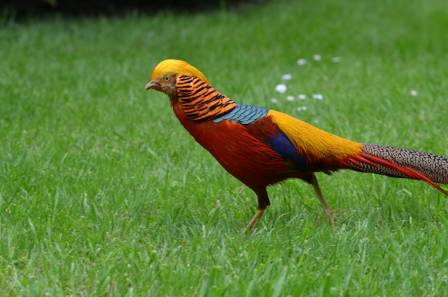
Golden Pheasant is the name of a Chinese restaurant in Torrance, California, known for offering a wide variety of dishes, generous portions, reasonable prices, and friendly service. Customer reviews frequently praise both the quality of the food and the overall dining experience.
LOG · en

Exploring Nine Distinctive Types of Burgers
In the vast and vibrant landscape of modern cuisine, burgers have firmly established themselves as a beloved staple, constantly evolving and presenting a remarkable array of flavors and dining experiences. Whether served at casual diners or upscale restaurants, burgers have managed to captivate the taste buds of countless people around the world. Let's take a closer look at nine different types of burgers that each bring something unique to the table.
LOG · en

Scented Sachet Do's and Don'ts
Scented sachets have been used for hundreds of years. Some of the earliest examples appeared in medieval Europe, when people filled small fragrance pouches to freshen linens and help mask unwanted smells. Although the materials and designs have changed over time, the basic purpose remains unchanged: sachets provide an easy, passive method for keeping enclosed areas pleasantly scented.
LOG · en

The Most Enigmatic Torch: Reframing the Statue of Liberty
Since its dedication, the Statue of Liberty has stood as more than a colossal sculpture. It has become a symbol of the friction between national independence and universal human rights, a beacon that sparks debate about who belongs and who is welcomed. This essay revisits the monument’s birth, its inaugural moment in New York, and the layered meanings that have energized public memory for well over a century.