Wire dispatch
Space Shuttle, the World’s First Reusable Spacecraft
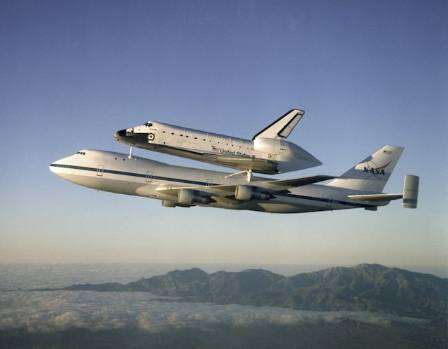
NASA’s five Space Shuttles became some of the most recognizable spacecraft ever built. Between 1981 and 2011, more than 800 people traveled aboard these famous orbiters. The program broadened NASA’s astronaut community and encouraged generations of people to become interested in space science and related careers.
Therin Arden
Wire note
Signal tip
The full dispatch write-up continues below on the discovery terminal.
Channel
Discovery Wire
NASA’s five Space Shuttles became some of the most recognizable spacecraft ever built. Between 1981 and 2011, more than 800 people traveled aboard these famous orbiters. The program broadened NASA’s astronaut community and encouraged generations of people to become interested in space science and related careers.
The shuttle program was an extraordinarily ambitious project, launched only about a decade after the first human journey into space. Unlike the capsule-shaped spacecraft that came before it, the shuttle returned its crew to Earth in an upright vehicle and landed smoothly on a runway much like an airplane. It was the first reusable spacecraft system of its kind. The orbiter, its three main engines, and the two solid rocket boosters could all be refurbished and flown again. The only major component that was not recovered was the orange-brown external fuel tank.
NASA initially imagined the shuttle as one element of a much larger strategy for expanding human activity throughout the solar system, potentially including missions to Mars. Those ambitions, however, did not fit well with the Nixon administration’s more practical post-Apollo philosophy. Under that approach, NASA was treated as another federal program competing for limited government resources.
Financial limitations, together with the expectation that reusability and frequent launches would eventually make spaceflight less expensive, helped establish the shuttle as the central vehicle for American human spaceflight. The first shuttle mission took place in 1981.
The Space Shuttle served as a versatile transport system capable of carrying civilian, military, and commercial payloads into orbit. Government officials became so confident in its capabilities that the United States temporarily adopted a shuttle-only policy for many space launches.
Plans also called for a second shuttle launch facility at Vandenberg Air Force Base in California. Such a site would have made missions into polar orbits possible. The facility was nearly prepared for service when the catastrophic loss of Space Shuttle Challenger and its seven astronauts in 1986 led officials to reduce the scope of the program. The Vandenberg launch complex was abandoned, expendable rockets once again became the choice for missions that did not require astronauts, and the shuttle eventually stopped transporting commercial and military payloads.
The Space Shuttle played an important role in several major scientific missions. It launched NASA’s Galileo spacecraft toward Jupiter and deployed the Magellan spacecraft on its journey to Venus. In 1990, the shuttle placed the Hubble Space Telescope into orbit and later carried astronauts back to Hubble on five separate servicing missions for repairs and upgrades. The shuttle fleet also delivered most of the early modules of the International Space Station and supported numerous construction, maintenance, and repair missions there.
The destruction of Space Shuttle Columbia in 2003 became another major turning point for the program. The accident contributed to a new plan that focused on completing the International Space Station, retiring the shuttle fleet, and shifting NASA’s human exploration efforts back toward the Moon. The final shuttle mission took place in 2011, leaving the United States without its own crewed orbital launch system for nine years. That period ended in 2020 when SpaceX’s Crew Dragon transported two astronauts to the International Space Station.
Technology developed for the shuttle continues to influence NASA’s exploration efforts. In particular, the shuttle’s main-engine technology has contributed to the Space Launch System, which serves as a major launch vehicle for NASA’s Artemis program.
The shuttle’s overall legacy is complicated. It did not achieve the original expectation of making human spaceflight rapid and inexpensive. Even so, the program accomplished numerous scientific, technological, engineering, and cultural milestones. Discovery became the most frequently flown shuttle, completing 39 missions, a record that is expected to remain significant for many years.
How the Space Shuttle Worked
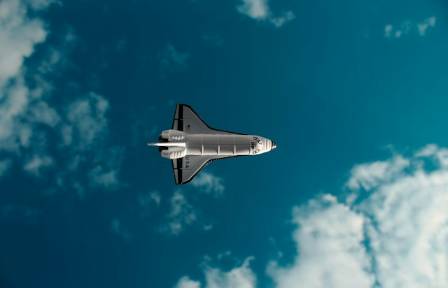
The Space Shuttle was launched vertically in the manner of a conventional rocket but returned to Earth horizontally like an airplane. Its black-and-white orbiter was equipped with three powerful main engines that received propellant from a massive external tank. Two solid rocket boosters were attached to the tank and supplied the additional thrust required to propel the shuttle through the lower atmosphere and into space.
About two minutes after liftoff, the solid rocket boosters had used up their propellant and separated from the shuttle. They descended by parachute into the Atlantic Ocean, where recovery ships retrieved them so they could be refurbished and used again. After reaching space, the shuttle released its external fuel tank. The tank then reentered the atmosphere roughly half an orbit later and was destroyed during its descent.
Once in orbit, the shuttle controlled its movement with numerous small thrusters. It also carried two larger orbital maneuvering engines that could adjust its orbit and help slow the spacecraft when it was time to return to Earth.
The shuttle could transport more than 24 metric tons of cargo into space inside its large payload bay and could bring approximately half that amount back to Earth. Its cargo bay also served as a working area where astronauts could retrieve, service, and repair satellites. This capability became especially important during missions involving the Hubble Space Telescope and during the construction of the International Space Station.
The payload bay could also accommodate a pressurized laboratory module. These laboratories gave astronauts a place to perform experiments in physical science and test new technologies. During missions to the International Space Station and the Russian space station Mir, the shuttle carried docking equipment inside its cargo bay.
As with other spacecraft returning from orbit, the shuttle experienced intense heating as it moved rapidly through the atmosphere. The compression and friction created by air molecules striking the vehicle generated extreme temperatures. Special ceramic tiles covering the underside and carbon-reinforced sections of the wings protected the spacecraft from this heat.
Although the shuttle looked and behaved like an airplane during landing, it did not use engines to power its descent. Instead, it returned to Earth as a glider, meaning the crew had only a single opportunity to line up with the runway and complete the landing successfully.
The Challenger Disaster
On January 28, 1986, Space Shuttle Challenger launched during unusually cold weather, even though engineers had expressed concerns about the conditions. A rubber sealing ring on one of the solid rocket boosters failed to function correctly because of the low temperature. Hot gases escaped through the damaged seal and eventually burned through the external fuel tank.
Only 73 seconds after liftoff, the external tank broke apart, destroying Challenger and killing all seven members of its crew.
The disaster was witnessed by an exceptionally large number of Americans, including many schoolchildren. One of the astronauts aboard the mission was elementary school teacher Christa McAuliffe, who had been selected as part of NASA’s Teacher in Space program.
Following the accident, NASA suspended shuttle launches for two years while engineers redesigned the solid rocket boosters. The tragedy also led the United States to move away from using the shuttle for future commercial and military launches.
The Columbia Disaster
Another tragedy occurred on February 1, 2003, when Space Shuttle Columbia was returning from orbit. Unlike traditional space capsules, whose heat shields are largely protected within the launch vehicle, the shuttle’s wings and underside remained exposed during the ascent to space.
During Columbia’s launch, a large section of insulating foam detached from the external fuel tank and struck the shuttle’s wing. The impact damaged the protective structure.
During atmospheric reentry, extremely hot gases entered through the damaged portion of the wing. Columbia subsequently broke apart approximately 60 kilometers, or 40 miles, above Texas while the spacecraft was gliding toward Florida. All seven astronauts aboard were killed.
The accident became another devastating loss for the shuttle program and resulted in another grounding of the fleet while NASA investigated the cause and developed measures intended to prevent a similar failure.
The Space Shuttle After Retirement
Following the end of the shuttle program in 2011, NASA transferred the remaining orbiters to museums and educational institutions.
Discovery is displayed near Washington, D.C., at the National Air and Space Museum. Atlantis is exhibited at Kennedy Space Center in Florida, while Endeavour is preserved at the California Science Center in Los Angeles.
The surviving orbiters now serve as reminders of one of the most ambitious periods in human spaceflight. The Space Shuttle program combined reusable spacecraft technology, satellite servicing, scientific research, international cooperation, and the construction of the International Space Station, while its two fatal accidents also demonstrated the extraordinary risks involved in human spaceflight.
More on the wire
LOG · en

Fascinating Facts About Great Spotted Woodpeckers
We have been incredibly lucky to have Great Spotted Woodpeckers nesting in our garden year after year. Watching these beautiful birds raise their young has been a wonderful experience, and the unmistakable drumming coming from the large oak trees has become a familiar part of our garden.
LOG · en

How Do Helicopters Achieve Flight?
A helicopter, a distinctive type of aircraft, attains flight through the rotation of its blades. Unlike airplanes relying on fixed wings, helicopters employ rotor blades to generate lift, enabling them to become airborne. This unique mechanism empowers helicopters to execute maneuvers that conventional airplanes find challenging. To comprehend the intricacies of helicopter flight, one must delve into the basics of wing design and lift principles.
LOG · en

8 Tallest Lighthouses in the United States
Lighthouses symbolize resilience and reliability, guiding sailors and fishermen home while warning them of dangerous coastlines. Standing tall as beacons of hope, they serve as essential landmarks along the shores.
LOG · en

6 Health and Well-being Benefits of Cat Companionship
The following article on the health benefits of owning a cat will be renovated to adopt a storytelling approach, creating a more engaging narrative for readers to immerse themselves in.
LOG · en

Is Celery Juice Actually Good for You? Everything You Should Know
Celery juice has become a wellness trend, praised for its refreshing taste and purported health benefits. But what’s really inside this green drink, and is it as beneficial as some claim? Here’s a detailed look at the nutritional profile, advantages, and potential downsides of celery juice.
LOG · en
The Essence of Men’s Artistic Gymnastics: A Comprehensive Guide to the Six Disciplines
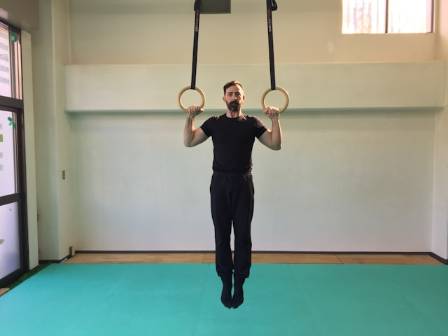
Men’s artistic gymnastics (MAG) stands as the cornerstone of gymnastics, with roots tracing back to ancient Greece, where athletes trained in strength, flexibility, and precision to prepare for warfare and competition. Recognized as the oldest form of organized gymnastics, it evolved through centuries—from 19th-century European gymnasiums to its debut as an Olympic sport at the first modern Games in 1896—to become a showcase of human physical excellence. At the elite level, MAG athletes compete across six demanding disciplines: floor exercise, pommel horse, still rings, vault, parallel bars, and high bar. Each event demands a unique blend of core skills—strength, balance, coordination, agility, and mental fortitude—while pushing the boundaries of what the human body can achieve. Below is an in-depth exploration of each discipline, uncovering the technical nuances, historical context, and competitive standards that define men’s artistic gymnastics.