Wire dispatch
Sago Palm: The Ancient Plant That Isn’t Really a Palm
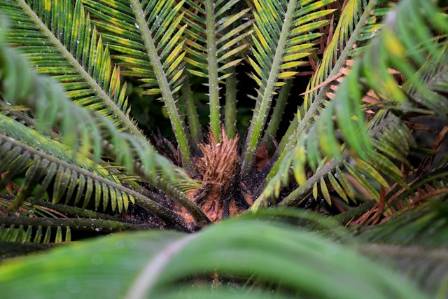
During a recent trip to the warm, sunny South, I had the opportunity to reacquaint myself with palm-like plants. Like many people from northern regions, my knowledge of palms is fairly limited. One plant, however, has always caught my attention: the Sago Palm. Although its appearance strongly suggests that it belongs to the palm family, it is actually much more closely related to pine trees.
Elara Winslow
Wire note
Signal tip
The full dispatch write-up continues below on the discovery terminal.
Channel
Discovery Wire
During a recent trip to the warm, sunny South, I had the opportunity to reacquaint myself with palm-like plants. Like many people from northern regions, my knowledge of palms is fairly limited. One plant, however, has always caught my attention: the Sago Palm. Although its appearance strongly suggests that it belongs to the palm family, it is actually much more closely related to pine trees.
An Ancient Branch of the Plant Kingdom
Long ago, when the Earth was still young and the ancient swamps of Pangea were accumulating the plant material that would eventually become fossil fuels, the botanical tree of life underwent an important division. One newly developing branch was initially slender and poorly equipped to compete, yet over time this group, later identified by 19th-century botanists as angiosperms, became the dominant plants in the modern world.
The older main branch of the botanical family tree did not disappear. Instead, these ancient plants, known as gymnosperms, gradually lost their former dominance. Three major groups of these plants still survive today: ginkgoes, conifers such as pines and spruces, and cycads, which include the plants commonly called cycad palms.
Sago Palm Characteristics
There are approximately 100 species of cycads living today, and the Sago Palm, Cycas revoluta, is among the most familiar. It originated in the Old World tropics, with its natural range extending from Madagascar to Japan. Although it grows extremely slowly, given sufficient time, a mature specimen can eventually develop a trunk around six feet long. During a visit to China, I was shown a Sago Palm that was reportedly 1,000 years old. The trunks generally remain unbranched, although when branching occurs, the new growth develops from the base of the plant.
Leaves and Growth Form
The Sago Palm is evergreen and produces stiff, feather-like foliage arranged in a circular whorl around the stem. Together, the leaves form a balanced, symmetrical rosette that can spread approximately three to four feet across. Each leaflet is narrow and firm, with a deep green upper surface and a distinct central midrib.
Male and Female Plants
Cycads are dioecious, which means that individual plants are either male or female. The reproductive biology of cycads has attracted considerable interest from botanists. Their reproductive structures and processes are remarkably unusual, particularly because the male sperm cells of cycads are the largest sperm cells found anywhere in biology, becoming nearly large enough to be visible without magnification.
Where the Sago Palm Can Grow
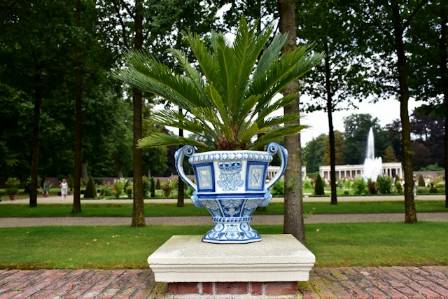
The name Sago Palm comes from a Polynesian term associated with a group of genuine palms that provide an edible starch. Despite the common name, Cycas revoluta is not a true palm.
In outdoor landscapes, Sago Palms are generally suited to USDA hardiness zones 9 and 10. Established plants can survive freezing temperatures down to roughly 20 degrees Fahrenheit. Gardeners living in colder regions generally need to grow them indoors if they want to keep these plants successfully.
Growing Sago Palms as Houseplants
As indoor plants, Sago Palms can become attractive, long-lived specimens. Their extremely slow growth means patience is essential. It may take ten years or more before a noticeable trunk begins to form.
One reason they perform well indoors is their ability to tolerate relatively low humidity, limited light and fluctuations in watering. Their growth habit is another consideration. Most specimens eventually become considerably wider than they are tall, allowing them to occupy a surprisingly large amount of floor area. For homes where space is limited, growing Sago Palms as bonsai specimens, a practice popular in Japan, provides an alternative way to enjoy them while keeping their size manageable.
Summer Care Outdoors
During spring and summer, Sago Palms can benefit from spending time outdoors on a patio. They should be positioned in high shade or somewhere that provides protection from intense afternoon sunlight. Avoid exposing them directly to the hottest afternoon rays.
Very little is known about exactly how Sago Palms respond to fertilizer, but providing an occasional application of a general houseplant fertilizer during the warmer growing season is a reasonable approach. This can help maintain adequate nutrition and support the strongest growth these naturally slow-growing plants are capable of producing.
Scale insects may occasionally infest Sago Palms, although they generally do not create serious problems. Regular observation of the foliage can help identify an infestation before it becomes significant.
More on the wire
LOG · en

Seattle’s Space Needle: A Thrill for All Ages
It has been about half a year since we relocated to Seattle, and the experience has been quite a journey. During this time, I was focused on adjusting to pandemic conditions while also settling into a new city, a new job, and a completely different outlook on life.
LOG · en

Tokyo Skytree
The Tokyo Skytree is a prominent broadcasting tower and one of Tokyo’s most recognizable landmarks. Located in the Sumida district near Asakusa, it serves as the centerpiece of Tokyo Skytree Town, a modern entertainment and shopping destination.
LOG · en

The Ultimate Guide to Selecting the Ideal Sunglasses
When your favorite pair of sunglasses inevitably gets damaged, the hunt for a replacement can feel overwhelming. Most people find themselves lost in a sea of questions regarding frame colors, lens types, and the dreaded "face shape" rules. It is time to simplify the process and debunk a common industry myth to help you find eyewear that actually looks great.
LOG · en

Discover 7 World's Most Enchanting Streets
While journeying through different destinations, it's easy to get consumed by the checklist of must-see landmarks. Yet, there's an undeniable charm in meandering through unfamiliar streets without a predefined agenda—a sentiment often more captivating than reaching a particular destination. Picture this: leisurely strolling along a scenic harbor or cobblestone lane, capturing the essence of the locale's unique style, and indulging in impromptu moments at roadside cafes. Truly sublime. To enhance your exploration, we offer guidance on the whereabouts of these captivating streets.
LOG · en

The Five Best Lighthouses of All the Lighthouses
Lighthouses feel almost pure in their purpose—strong, noble structures built to guide and protect. They function as symbols of safety and direction, both literally and in a more symbolic sense. During the late 1600s conflict between France and Britain, French privateers once captured engineer Henry Winstanley while he was working on the first lighthouse at the Eddystone Rocks near Cornwall. King Louis XIV ordered his release, reportedly stating that France was fighting England, not humanity itself.
LOG · en
Interesting Facts About Kenya’s National Bird
As the global pandemic continues and people around the world spend more time at home looking for ways to stay entertained, bird-watching can be a wonderful activity for those living in Kenya.