Wire dispatch
The Remarkable Origins and History of Holography
Light moves through space as an electromagnetic wave. Holography relies directly on this wave behavior. Standard cameras use glass lenses to focus light onto electronic sensors or film. Standard photography simply records light intensity. Holography operates differently. It captures the actual shape of light waves reflecting off an object. The process resembles pressing a key into soft clay to leave a physical imprint. Meeting light waves create complex interference patterns. These patterns match ripples in a pond when two stones drop into water. Holograms store this wave information to generate complete three-dimensional images.
Chloe Harrison
Wire note
Signal tip
The full dispatch write-up continues below on the discovery terminal.
Channel
Discovery Wire
Light moves through space as an electromagnetic wave. Holography relies directly on this wave behavior. Standard cameras use glass lenses to focus light onto electronic sensors or film. Standard photography simply records light intensity. Holography operates differently. It captures the actual shape of light waves reflecting off an object. The process resembles pressing a key into soft clay to leave a physical imprint. Meeting light waves create complex interference patterns. These patterns match ripples in a pond when two stones drop into water. Holograms store this wave information to generate complete three-dimensional images.
How the Invention of Lasers Transformed Holography
True three-dimensional holograms became practical only after scientists invented the laser. Lasers produce completely uniform light waves. These synchronized light waves move together in perfect phase. Scientists call this uniform light coherent. Coherent beams allow researchers to record delicate wave interference patterns clearly. Albert Einstein proposed the fundamental theory of stimulated emission back in nineteen seventeen. Arthur Shawlow and Charles Townes published the initial laser concept in nineteen fifty-eight. Theodore Maiman constructed the first functional ruby laser in nineteen sixty. Ali Javan created the helium-neon gas laser shortly after at Bell Laboratories. Robert Hall engineered the semiconductor injection laser in nineteen sixty-three. Gordon Gould eventually secured the primary laser patent after a legal struggle lasting twenty years. Gould coined the term LASER to represent Light Amplification by Stimulated Emission of Radiation.
Early Interference Breakthroughs by Gabriel Lippmann
Holographic principles emerged long before laser devices existed. Gabriel Lippmann developed early theories of wave interference photography in France during eighteen eighty-six. Lippmann coated glass photographic plates with liquid mercury. The shiny mercury reflected light waves directly back through the emulsion layer. This reflection generated distinct standing wave interference. Lippmann shared his findings with scientific academies in eighteen ninety-one and eighteen ninety-three. He published his complete optical theory in eighteen ninety-four. His groundbreaking optical research earned him a Nobel Prize in Physics in nineteen hundred and eight. Lippmann mentored Marie Curie during her university studies in Paris. He introduced her to Pierre Curie. Marie Curie later won two separate Nobel Prizes for her discoveries in physics and chemistry.
The Unique Physics Behind Lippmann Images
Lippmann was not an exceptional student during his early youth. He frequently ignored academic subjects that lacked personal interest. He even failed an examination meant to qualify him as a teacher. Despite those academic stumbles, his interference photography revolutionized optical science. His color images used no chemical dyes or pigments. Pure light diffraction generated every vibrant color. Viewers had to hold the physical glass plates at precise angles toward ambient light. That viewing requirement mirrors how modern holograms display images.
Dennis Gabor and Wavefront Reconstruction
Dennis Gabor became fascinated with physics after studying Lippmann scientific papers. Gabor fled Germany in nineteen thirty-three to escape political persecution. He moved to England and joined a commercial research laboratory. Gabor tried to enhance electron microscopes to view individual atoms. During those microscopic experiments, he discovered the principle of wavefront reconstruction. He named his discovery holography using Greek words meaning whole message. Gabor received the Nobel Prize in Physics in nineteen seventy-one for establishing holographic theory.
Independent Discoveries in the Soviet Union
Yuri Denisyuk worked independently inside the Soviet Union. He read Lippmann early papers on interference photography. Denisyuk realized the technique could record realistic three-dimensional scenes. He began experimental trials in nineteen fifty-eight using filtered mercury arc lamps. He published his successful results in nineteen sixty-two. Soviet reviewers initially dismissed his breakthrough research with harsh criticism. Denisyuk created the earliest three-dimensional reflection holograms without knowing about Gabor. Soviet administrators held Denisyuk in low regard for years. His academic standing changed dramatically when visiting American scientists praised his laboratory achievements. Soviet officials then granted Denisyuk an advanced research facility and recognized his accomplishments.
Laser Transmission Holography in America
Emmett Leith reinvented holographic principles in nineteen fifty-eight while working on classified military radar systems. Leith had no prior knowledge of Gabor earlier discoveries. He published his radar and optical findings in nineteen sixty-one. Leith collaborated with Juris Upatnieks after helium-neon gas lasers became available. Together, they demonstrated off-axis laser transmission holography to the public. They created clear three-dimensional images without knowing about Denisyuk parallel developments in the Soviet Union.
More on the wire
LOG · en
Four Stages And Five Tips to Master Realistic Portrait Painting
Painting a striking portrait that you can proudly showcase or sell is a dream for many artists. Yet, the challenge of capturing lifelike features, expressions, and flesh tones can often deter painters from venturing into portrait work.
LOG · en
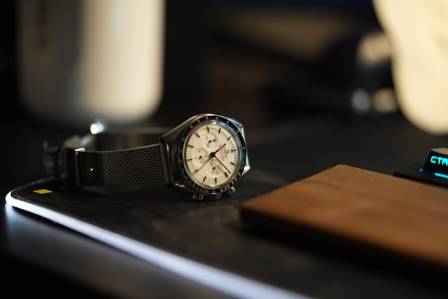
How to Wear a Watch
Wearing a watch is more than a way to tell time—it is a subtle expression of personal style. From classic analog timepieces to modern chronographs, the type of watch you choose and how you wear it can significantly impact your overall appearance. This guide provides expert advice on wearing a watch elegantly and appropriately.
LOG · en
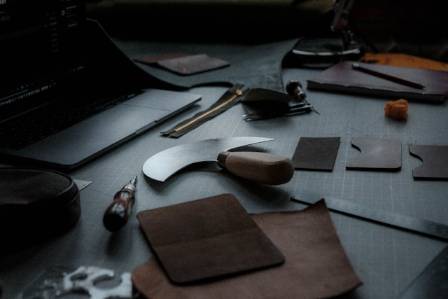
Top Handmade Items to Craft and Sell in 2025
Wondering which crafts will be popular in 2025? Research the market and understand your audience’s preferences. Here are some trending handmade ideas to inspire your product lineup. Customized Creations
LOG · en
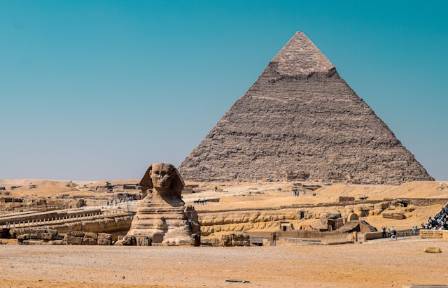
A Brief History of Tall Structures: The Evolution of Modern Skyscrapers
From the ancient Tower of Babel to the iconic Burj Khalifa, humanity's desire to reach greater heights has always been a powerful driving force. Over the centuries, we have raised towering structures to celebrate our culture, showcase our cities, or simply exhibit our engineering prowess.
LOG · en
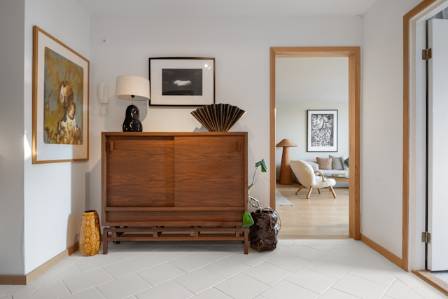
Best Solid Wood Storage Cabinets for Home & Office
Keeping a home or office organized becomes much easier with the right furniture. A thoughtfully designed storage cabinet not only reduces clutter but also improves the overall appearance and comfort of a room. Among the many storage options available today, solid wood cabinets remain one of the most popular choices because of their durability, timeless style, and ability to blend effortlessly with different interior designs. Whether placed in a bedroom, kitchen, living room, or workspace, a solid wood cabinet adds warmth, character, and functionality.
LOG · en
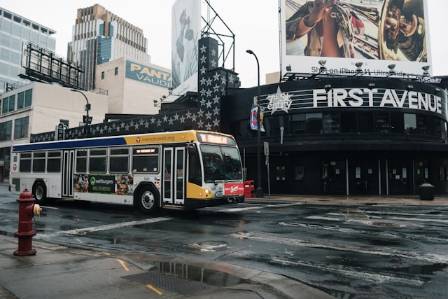
Seven Extraordinary Buses Around the World That Will Astonish You
In the realm of transportation, certain buses transcend their utilitarian purpose, transforming into immersive cultural experiences. These exceptional vehicles offer passengers more than just a ride; they provide a journey through the heart and soul of their surroundings. From vibrant, art-adorned minibuses in Kenya to innovative amphibious buses in London and Amsterdam, let's embark on a global tour of seven remarkable buses that redefine travel.