Wire dispatch
The basics of microchips
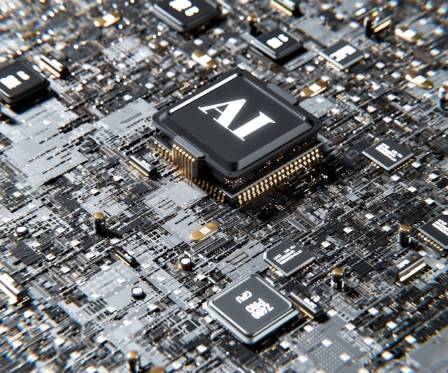
It’s difficult to picture life without microchips. These tiny components are at the core of the devices we rely on every day—whether for work, travel, health, or entertainment. From automobiles to smartphones, MRI machines to industrial robots and cloud data centers, microchips power the technology that surrounds us.
Henry Collins
Wire note
Signal tip
The full dispatch write-up continues below on the discovery terminal.
Channel
Discovery Wire
It’s difficult to picture life without microchips. These tiny components are at the core of the devices we rely on every day—whether for work, travel, health, or entertainment. From automobiles to smartphones, MRI machines to industrial robots and cloud data centers, microchips power the technology that surrounds us.
Microchips are everywhere. In 2021, shipments of semiconductor units hit a record 1.15 trillion, and in 2022, global semiconductor sales surpassed €573.5 billion. Each new generation of chips brings better performance, added features, and lower costs, driving innovation and transforming entire industries.
What Is a Microchip?
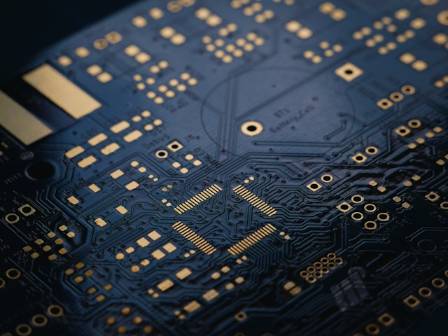
A microchip—also known as a chip, computer chip, integrated circuit (IC), or processor—is a collection of electronic circuits built onto a small piece of silicon. Transistors on the chip function as tiny switches, controlling the flow of electricity. The intricate patterns of these switches are crafted on the silicon wafer through processes that add and remove materials, creating a complex layered network of connections.
Silicon: Digital Gold
Silicon is the preferred material for chip manufacturing. Unlike metals, which naturally conduct electricity, silicon is a semiconductor, meaning its ability to conduct electricity can be altered by adding other elements, such as phosphorus or boron. This property allows engineers to precisely control electrical currents.
The great news is that silicon is abundant—it comes from sand, the second most common element on Earth after oxygen. Silicon wafers are produced from a type of sand called silica sand, which is melted and formed into large cylinders called ingots. These ingots are then sliced into thin wafers for chip fabrication.
Nanoscale Engineering
A microchip the size of a fingernail can contain billions of transistors. This tiny scale means that chip features are measured in nanometers—one billionth of a meter. For perspective, a human red blood cell is about 7,000 nanometers across, and the influenza virus is roughly 100 nanometers. The most advanced chips feature structures only a few dozen nanometers wide. Extreme ultraviolet (EUV) lithography from companies like ASML allows engineers to create even smaller features, packing more transistors onto a chip and increasing its functionality.
Types of Microchips
Microchips can be classified by their circuitry or by their function:
Circuitry Types:
Digital chips: Work with binary signals (0s and 1s).
Analog chips: Process continuous signals and rely on traditional components like resistors and capacitors.
Mixed-signal chips: Combine both analog and digital circuitry.
Function-Based Types:
Logic chips: These are the “brains” of devices, processing information to complete tasks. Examples include:
CPUs (Central Processing Units): The original general-purpose chips, dating back to the 1960s.
GPUs (Graphics Processing Units): Optimized for visual rendering.
NPUs (Neural Processing Units): Designed for AI and deep learning.
Memory chips: Store data, either temporarily or permanently.
Volatile memory (e.g., DRAM): Holds information only while the device is powered on.
Non-volatile memory (e.g., NAND Flash): Retains data when powered off, storing things like photos and videos.
ASICs (Application-Specific Integrated Circuits): Designed for single-purpose, repetitive tasks, such as barcode scanning.
SoCs (System-on-a-Chip): Combine multiple components—like processors, graphics, audio, Wi-Fi, and cameras—into one chip.
Computing Power Revolution
Advances in microchips are responsible for the exponential growth in computing performance. Between 1956 and 2015, computing power increased a trillion-fold. For comparison, the computer that guided Apollo missions to the moon had just 32,768 bits of RAM and 589,824 bits of ROM—about twice the processing power of a Nintendo console. Today, a typical smartphone has roughly a million times more RAM and seven million times more ROM, with around 100,000 times more processing power.
Chips also enable modern applications like virtual reality, AI on devices, faster data transfer with 5G, and advanced algorithms used in machine learning.
Data Explosion
All this processing generates massive amounts of data. By 2025, it’s projected that humanity will produce 175 zettabytes annually—equivalent to one billion terabytes. To visualize, if you stored 175 zettabytes on DVDs, the stack would circle the Earth 222 times.
Microchips are truly the building blocks of today’s technology, powering the devices, applications, and innovations that define modern life.
More on the wire
LOG · en

Why Cats Make Remarkable Companions
The debate between feline and canine lovers is as old as pet ownership itself. While dogs often take the spotlight with their exuberant personalities, cats offer a quieter, more subtle charm that’s just as endearing. If you've always leaned toward dogs, you might find your perspective shifting after discovering the unique benefits of sharing your space with a cat.
LOG · en
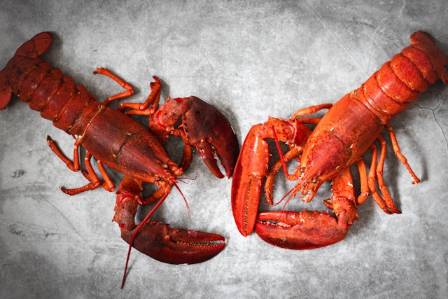
The Best Broiled Lobster Tail Recipe (Buttery Garlic Herb, Restaurant-Style)
This decadent lobster tail recipe turns a luxury seafood splurge into an easy, 20-minute home-cooked meal. Large lobster tails are butterflied for elegant presentation, slathered in a garlic herb butter sauce, and broiled to tender, juicy perfection—ideal for date nights, Valentine’s Day, or special family dinners, with no restaurant reservations required.
LOG · en

6 Points to Strategize Your Star Trail Photography
Capturing stunning star trails requires meticulous planning, considering various factors such as weather conditions, light pollution, lunar phases, and location. By adhering to the following guidelines, you can streamline the process and ensure captivating results in your star trail shots.
LOG · en
The Ultimate Guide to Selecting the Ideal Sunglasses
When your favorite pair of sunglasses inevitably gets damaged, the hunt for a replacement can feel overwhelming. Most people find themselves lost in a sea of questions regarding frame colors, lens types, and the dreaded "face shape" rules. It is time to simplify the process and debunk a common industry myth to help you find eyewear that actually looks great.
LOG · en
10 Notable Scientific Breakthroughs in 2023
Let's know about these findings in 2023!
LOG · en
Underwater robots
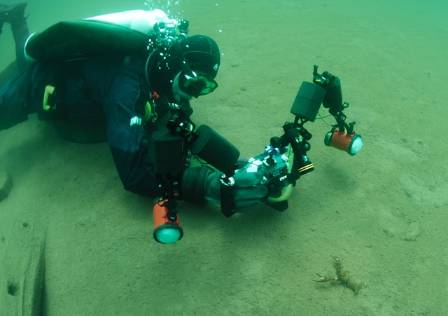
Robust Object Detection for Underwater Robots via Domain Generalization.