Wire dispatch
Pink-necked green pigeon
The pink-necked green pigeon (Treron vernans) is a bird species belonging to the pigeon and dove family, Columbidae. It is one of the more widespread green pigeons in Southeast Asia, occurring from Myanmar and Vietnam southward through the major islands of Indonesia and the Philippines.
Justin Powell
Wire note
Signal tip
The full dispatch write-up continues below on the discovery terminal.
Channel
Discovery Wire
The pink-necked green pigeon (Treron vernans) is a bird species belonging to the pigeon and dove family, Columbidae. It is one of the more widespread green pigeons in Southeast Asia, occurring from Myanmar and Vietnam southward through the major islands of Indonesia and the Philippines.
This medium-sized pigeon is recognized for its mostly green plumage, while the distinctive pink-colored neck that gives the species its name is found only in males. The species occupies a variety of natural forests and human-altered environments, with a particular preference for more open landscapes.
Its diet mainly consists of fruit, especially figs. Breeding pairs usually produce two eggs in a simple twig nest built in trees, bushes, or hedges. Both parents share responsibility for incubating the eggs and raising the young. Because of its fruit-eating habits, the species plays an important role in spreading plant seeds.
The pink-necked green pigeon has adapted successfully to human activity and can even survive in densely populated cities as long as suitable fruit-producing trees are available. It is currently not considered threatened with extinction.
Taxonomy and Naming
The pink-necked green pigeon was first described by Carl Linnaeus in 1771 under the scientific name Columba vernans. The species name vernans comes from the Latin term meaning “flourishing” or “bright.”
Later, the species was transferred to the green pigeon genus Treron. Within this group, it is closely related to the orange-breasted green pigeon, another similarly colored species found in India and Southeast Asia.
Over time, several subspecies have been proposed, with some classifications recognizing up to nine forms in addition to the nominate type. However, major bird classification systems, including the International Ornithological Congress, Howard and Moore Complete Checklist of the Birds of the World, and Clements Checklist of Birds of the World, do not recognize these proposed subspecies as valid and treat the species as monotypic.
The Handbook of the Birds of the World is the only major reference that continues to list possible subspecies, although it notes that many differences appear gradual across geographic regions and require further study.
The official common name recognized by the International Ornithological Congress is “pink-necked green pigeon.” It is also sometimes called the pink-necked pigeon.
Physical Description
The pink-necked green pigeon is a medium-sized bird measuring approximately 25 to 30 centimeters in length and weighing between 105 and 160 grams.
The species shows clear differences between males and females. The male has a gray head, a pinkish neck and upper chest, and an orange-colored lower breast. Its back is olive green, while the wings are green with black and yellow edges that create a noticeable yellow stripe when the bird is flying.
The underside is yellowish with gray sides, and the tail is gray with a dark band near the tip and a chestnut-colored area. The female is generally smaller and has a more uniformly green appearance, with a yellowish belly, throat, and face, along with a green crown and rear neck.
The legs are pink or reddish, and the bill may appear white, pale blue-green, or gray. Young birds resemble females but usually have duller gray coloration on the upper parts of the body.
Unlike many pigeons, members of the genus Treron generally do not produce typical cooing sounds. Instead, they often make whistles and quacking-like calls. Male pink-necked green pigeons produce a three-part whistling call that ends with a cooing note.
They have also been reported to make rough “krrak krrak” sounds, although the species is generally considered quiet. Vocalizations are most commonly heard when birds gather at communal roosts or locate feeding areas.
Distribution and Habitat
The pink-necked green pigeon has a wide distribution across Southeast Asia. Its range includes southern Myanmar, Thailand, Cambodia, Vietnam, the Malay Peninsula, the Greater Sunda Islands, surrounding islands, Bali, Lombok, Sumbawa, the Moluccas, and the Philippines.
The species can survive in many different environments, including primary forests, forest margins, secondary forests, and coastal mangrove areas. It prefers open habitats and is often found along the edges of thicker forests rather than deep inside them.
It also adapts well to areas influenced by humans, such as gardens, plantations, and agricultural landscapes. The species is more commonly found in lowland regions and coastal areas, although it can occur at higher elevations, reaching around 300 meters in the Philippines, 750 meters in Borneo, and 1,200 meters in Sulawesi.
The species is generally considered non-migratory, although some sources suggest that it may undertake local movements in search of food. A closely related green pigeon species is known to travel long distances following fruit availability, and the pink-necked green pigeon may show similar behavior.
After the volcanic destruction of Krakatoa’s main island in 1883, the pink-necked green pigeon was recorded during the first bird survey of the remaining islands in 1908. At that time, it was the only specialized fruit-eating bird known to have successfully established itself there.
The species later colonized Anak Krakatau, a volcanic island that emerged from the sea in 1927. This occurred within 36 years after a major eruption in 1952. The delay was likely related to the time needed for fig trees to become established and produce fruit.
The species eventually disappeared from Anak Krakatau because of its small population size and predation. More recently, it has expanded its range and reached Flores sometime after 2000.
Feeding Behavior
The pink-necked green pigeon is primarily a fruit-eating bird. Figs (Ficus) make up a major part of its diet, but it also consumes fruits from other plants, including Glochidion, Breynia, Vitex, Macaranga, Muntingia, Melastoma, Oncosperma, and Bridelia.
Although it occasionally eats shoots, buds, and seeds, these items make up a much smaller portion of its diet. In one study conducted in Sulawesi, researchers recorded 55 feeding observations, and every observation involved fruit consumption, mainly figs.
The species usually feeds in the middle levels of the forest canopy and rarely searches for food near the ground. It is highly agile and can cling to thin branches while reaching fruits located at branch tips.
Like other members of the Treron genus, it has a strong muscular gizzard that may contain small stones used for processing seeds inside fruit. However, research on related species suggests that not every individual contains these grinding stones, meaning some seeds may pass through the digestive system and be dispersed.
The species is social and often feeds in small groups. When food sources are abundant, groups can grow much larger, sometimes reaching around 70 birds. They also gather communally at night, with roosting groups sometimes numbering in the hundreds.
Breeding and Reproduction
The pink-necked green pigeon does not have a clearly defined breeding season and has been recorded nesting throughout most of the year across its range, except in February.
Nest construction is shared between the sexes. The male collects materials, while the female arranges them into the final structure. The nest itself is a simple and fragile platform made from twigs and smaller plant materials.
Females usually lay two white eggs measuring approximately 26.8 to 28.9 millimeters by 20.3 to 21.8 millimeters. Nests are placed in trees, shrubs, or hedges, sometimes surprisingly close to the ground, ranging from about 1 to 10 meters high.
Detailed information about the breeding biology of this species remains limited, with only one detailed breeding observation reported from Singapore.
In that observation, both parents shared incubation duties. The male incubated the eggs during the day, while the female took over at night. The incubation period lasted about 17 days.
After hatching, the chicks are kept warm continuously for the first several days. As during incubation, the male provides daytime care and the female takes over at night.
Newly hatched chicks have very little feathering, with brown skin and a few white pin feathers. They leave the nest about 10 days after hatching but remain nearby for several more days while continuing to receive food from their parents.
Ecological Importance
Like many fruit-eating pigeons, the pink-necked green pigeon is believed to be an important seed disperser in forests and woodland ecosystems.
For many years, its seed-grinding gizzard led some researchers to believe that the species mainly destroyed seeds rather than spreading them. However, studies of related species show that some seeds can survive digestion and pass through the bird’s body, suggesting that the pink-necked green pigeon also contributes to plant regeneration.
The species may have played an important role in helping fig trees return to the Krakatoa islands after the original landscape was destroyed by volcanic activity.
It may not have introduced the earliest shrub-like fig species, which could have been carried by more general fruit-eating birds such as bulbuls. However, once fruit-producing figs became established, pink-necked green pigeons likely helped transport additional fig species and spread seeds between islands.
Researchers estimate that the species can reach the Krakatoa islands in about 48 minutes of flight, which is much shorter than the estimated seed retention period in its digestive system, ranging from 60 to 480 minutes.
The species has been recorded as prey for white-bellied sea eagles, and peregrine falcons have been suggested as a possible cause of its disappearance from Anak Krakatau.
Conservation Status
The pink-necked green pigeon is a highly adaptable bird that has benefited from its ability to live alongside humans.
It has successfully expanded into urban environments and is common in Singapore, including protected areas and city gardens. Its numbers have even increased in some locations over time.
Although the species faces some hunting pressure in Thailand, Malaysia, and Sumatra, and is sometimes captured for the cage bird trade, it remains widespread and abundant throughout most of its range.
Because the species is not currently considered at risk of extinction, it has been classified as Least Concern on the IUCN Red List of Threatened Species.
More on the wire
LOG · en

Style Relaxed Fit Jeans: Men’s Fashion Guide
For many years, stylish dressing was often associated with sacrificing comfort. Slim silhouettes, tight cuts, and structured outfits dominated fashion, even when they limited movement and practicality. Relaxed fit jeans have completely changed that idea. They are not simply a way to dress casually; they represent a more thoughtful approach to everyday style.
LOG · en

5 Most Beautiful Hikes
Then there was the inherent arrogance of such a list. No matter how many iconic routes I have completed or peaks I have summited, there are always more waiting to be discovered. Any selection I made would merely reflect a fraction of my personal journey.
LOG · en
A Delectable Journey Through Traditional Chinese Pastries in Macau
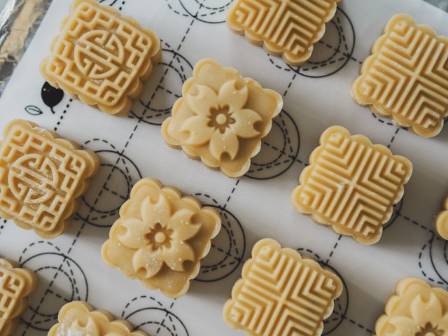
Every tourist stepping foot in Macau quickly discovers that pastries and cookies are more than just snacks—they are a cultural cornerstone of the city. Historic landmarks are framed by the inviting storefronts of bakeries, hawkers offer generous free samples on bustling streets, and the air is perpetually infused with the sweet, warm aromas of freshly baked treats. From steamed delights to flaky tarts and crispy biscuits, Macau’s Chinese pastries reflect a unique blend of Cantonese tradition, regional influences, and colonial history. Whether you’re a dessert enthusiast or a curious traveler eager to taste local culture, this guide will lead you through the must-try traditional Chinese pastries that define Macau’s culinary identity.
LOG · en

Understanding Chinese Architecture
Chinese architecture is one of the world’s oldest and most influential building traditions, developing over a history that spans more than four millennia. Shaped by cultural beliefs, philosophical thought, and practical construction techniques, it has formed a distinctive architectural identity that continues to influence modern design.
LOG · en

Rocky Coast Landforms
The powerful waves and crashing surf along rocky shorelines have fascinated ocean enthusiasts for centuries. These coastal areas are shaped mainly by erosion and are commonly found along active continental margins with narrow continental shelves created through tectonic activity such as subduction.
LOG · en

Maple Leaves in Full Fall Foliage Colors
Autumn is one of my favorite seasons, and it is also the best time of year for photography. I have mentioned before how disappointing it can be when fall arrives and the leaves show little color or the display is almost completely missing.