Wire dispatch
Rocky Coast Landforms
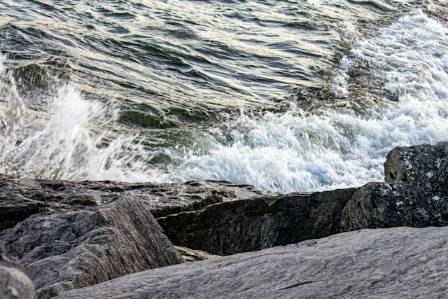
The powerful waves and crashing surf along rocky shorelines have fascinated ocean enthusiasts for centuries. These coastal areas are shaped mainly by erosion and are commonly found along active continental margins with narrow continental shelves created through tectonic activity such as subduction.
Odessa Lane
Wire note
Signal tip
The full dispatch write-up continues below on the discovery terminal.
Channel
Discovery Wire
The powerful waves and crashing surf along rocky shorelines have fascinated ocean enthusiasts for centuries. These coastal areas are shaped mainly by erosion and are commonly found along active continental margins with narrow continental shelves created through tectonic activity such as subduction.
Rocky shores can develop from many different types of bedrock, including sedimentary, igneous, and metamorphic rocks. They are often associated with complicated geological structures, including faults, folds, volcanic intrusions, and volcanic deposits. The final shape of a rocky coastline depends on factors such as rock strength, climate conditions, and wave energy.
Hard, durable rock combined with strong winds and powerful waves usually creates dramatic cliffs and steep coastal landscapes. In contrast, softer rocks exposed to weaker wave activity tend to produce gentler slopes. Examples include the towering cliffs of Kalaupapa National Historical Park in Hawaii and the more gradually shaped rocky shores of Dry Tortugas National Park in Florida. Glacial processes can also create steep rocky coastlines by forming fjords and piles of broken rock known as talus slopes. Carbonate-based coastlines, made from shells and skeletal materials, may develop lithified sand dunes called eolianites, which can later erode into cliffs and coastal bluffs.
Geological Features Found Along Rocky Shores
Rocky coastlines contain some of the most impressive natural formations on Earth. Continuous wave action can carve openings, pillars, and dramatic cliffs, while erosion gradually reshapes the land. Glaciers, changing sea levels, and weathering processes also contribute to the creation of many unique coastal landscapes.
Fjords
Between approximately 1.8 million and 10,000 years ago, glaciers from the Pleistocene period carved deep, steep-sided valleys into the landscape. When sea levels rose, these valleys became flooded, creating the coastal features known as fjords.
Fjords are among the most spectacular examples of glacially formed rocky coasts. Kenai Fjords National Park in Alaska contains outstanding examples of these landscapes, where mountains, glaciers, and seawater meet in dramatic formations.
Headlands, Pocket Beaches, and Wave Refraction
Headlands and small sheltered beaches create distinctive patterns along rocky coastlines. In places such as Channel Islands National Park in California, aerial views reveal how waves bend around projecting areas of land.
This process, known as wave refraction, concentrates wave energy on exposed parts of headlands, increasing erosion in those areas. Meanwhile, sheltered bays between headlands experience weaker wave activity and often collect sand, forming small pocket beaches.
Because sediment movement is limited in these protected areas, pocket beaches may remain stable during calm conditions but can change significantly or even disappear after powerful storms, strong winds, or periods of increased wave energy.
Sea Caves
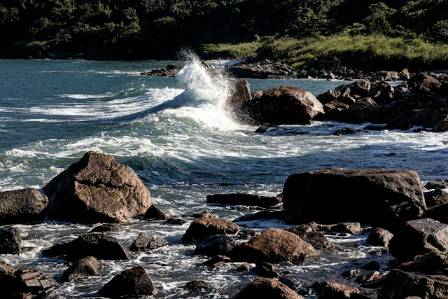
Rocky headlands are constantly exposed to waves, wind, and severe storms. Over time, these forces can wear away weaker sections of rock, creating sea caves within coastal cliffs and promontories.
These caves provide unique habitats for many marine organisms, including bryozoans, sponges, barnacles, tube worms, and certain species of red algae that thrive in shaded environments. Beyond their ecological importance, sea caves are also popular destinations for boaters, kayakers, and divers.
Sea Arches and Sea Stacks
Long-term erosion along rocky headlands can create remarkable formations such as sea arches and sea stacks. These structures form when sections of a coastal cliff become separated from the mainland through repeated wave action.
As erosion continues, openings within sea arches may expand until the structure eventually collapses, leaving behind isolated columns of rock known as sea stacks. Both sea arches and sea stacks are temporary features that will continue changing as natural erosion progresses.
Olympic National Park in Washington is home to hundreds of these striking formations, which showcase the ongoing interaction between ocean forces and coastal geology.
Sea Cliffs
The appearance of sea cliffs is influenced by several geological factors, including rock layers, structural features, the angle at which sediments were deposited, and the type of bedrock involved.
Large, solid rocks such as granite often wear away in a relatively even pattern, while layered sedimentary rocks may erode unevenly, creating stepped cliff faces. Because wave energy is especially strong in middle-latitude regions, many steep coastal cliffs are found there compared with areas closer to the poles or equator.
In Hawaii, the Na Pali coastline features towering sea cliffs that rise thousands of feet above the Pacific Ocean. These dramatic formations are considered an important example of coastal scenery and were recognized as part of the nation’s natural heritage when the North Shore Cliffs National Natural Landmark was established in 1972.
Tidewater Glaciers
Tidewater glaciers, also called marine glaciers, are glaciers that extend directly into the ocean or end within a fjord. Because their glacier fronts are often accessible, they are among the most closely studied glacier types.
Their behavior is influenced by climate, landscape conditions, and long-term snowfall patterns. Some tidewater glaciers can retreat rapidly, producing large amounts of floating ice and creating numerous icebergs.
When these icebergs move into nearby shipping routes, especially areas with heavy vessel traffic such as Alaskan waters, they can create serious hazards. Tidewater glaciers usually display a bright blue-white appearance because of the density of compressed ice and the process of calving, when large pieces of ice break away into the sea.
More on the wire
LOG · en
Comprehensive Guide to Illustrating and Coloring Natural Landscapes
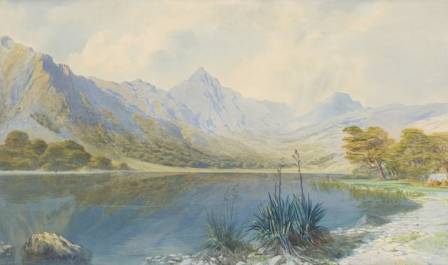
The foundation of a successful landscape begins with thorough research. Before putting pen to paper or stylus to tablet, gather various reference images to better understand your subject. These visuals will assist you in establishing a cohesive color palette, defining complex shapes, managing perspective, and adding realistic details. If you find yourself stuck at the beginning of the process, studying photographs can spark new ideas. For some artists, starting with a physical sketch on paper allows for more fluid lines and organic shapes. You can simply photograph your paper sketch and import it into your digital software to use as a blueprint, or you can begin directly in your digital application.
LOG · en

Recent Findings on Pesticide Residues in Indonesian Rice
A study released in the publication Future of Food: Journal on Food, Agriculture and Society examined organic and conventionally grown rice from Indonesia for pesticide traces. Chemical residues were identified solely in the conventional rice samples.
LOG · en

How to draw a Cat in 6 easy steps
In this drawing tutorial, we’ll guide you through creating a cat in just six straightforward steps. Each stage builds on the last, gradually shaping your sketch into a complete cat illustration. In this step-by-step guide, you’ll start by drawing the lines highlighted in red for each step, and as you progress, the lines from previous steps will appear in black to help you track your progress.
LOG · en

Iconic classic cars of all time
Nothing evokes passion and admiration quite like classic cars. These machines are more than mere transportation—they are rolling masterpieces, carefully crafted to combine design, performance, and elegance. For car enthusiasts and collectors, classic automobiles are akin to fine art, embodying a timeless sense of style and engineering prowess. In this article, we explore ten legendary classic cars that have left an enduring imprint on automotive history.
LOG · en
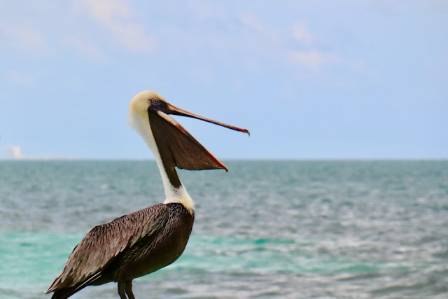
A bird flying close to the water's surface
Pacific Coast brown pelicans form breeding colonies from Baja California northward to California’s Channel Islands, with nesting activity occurring mainly during winter and spring. Once the breeding season ends, many birds migrate north. A small number remain visible in Monterey Bay throughout the year, but most individuals arrive during summer and remain in the area until early autumn.
LOG · en
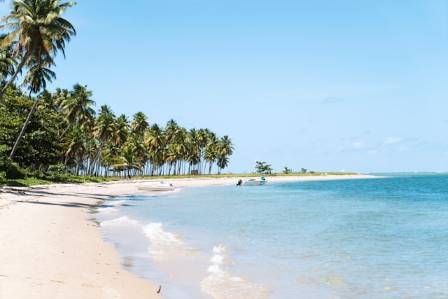
The Guide to Planning Your Dream Beach Vacation
As the road stretches ahead beneath a canopy of waving palm trees, passing small roadside shops and stands filled with Southern treats, the steady rhythm of the journey sets the mood for the adventure waiting ahead. The ocean breeze flows through the open windows, carrying the fresh scent of the Atlantic, reminding you that the beach is near. Children eagerly talk about making castles in the sand, searching for dolphins, and spending endless hours by the water. North Myrtle Beach is calling, offering sunny afternoons, peaceful evenings by the shore, and countless moments your family will remember for years.