Wire dispatch
Small Boat, Big Water
People can spend years getting ready for the Great Loop. They look for the perfect boat, customize it to suit their needs, and carefully plan, organize and stock everything they believe they might require before finally leaving the dock.
Orion Whitlock
Wire note
Signal tip
The full dispatch write-up continues below on the discovery terminal.
Channel
Discovery Wire
People can spend years getting ready for the Great Loop. They look for the perfect boat, customize it to suit their needs, and carefully plan, organize and stock everything they believe they might require before finally leaving the dock.
My experience was almost the complete opposite. When I set out on my first Great Loop cruise, I didn’t even know what the Great Loop was. I had no idea how complicated the journey could become or how many unexpected problems might arise while traveling aboard my 22-foot C-Dory powered by a 90-hp Yamaha. At the time, I also knew very few people in the United States, so there wasn’t much keeping me in one place. I simply continued onward and finished the Loop in roughly four months.
A Lifelong Love of Adventure
My adventurous nature probably comes from my mother. My father was a Scottish-British diplomat who met her in Tokyo shortly after World War II ended. I was born in Bogotá, Colombia, and our family later lived in Turkey, Austria, Denver, Los Angeles, Hawaii, Ethiopia, Mozambique, Angola and France. After retiring, my father died, having smoked far too many duty-free cigarettes.
My mother eventually moved to Sarasota, Florida, where she purchased a small sailboat and married the man who had helped teach her how to sail. The two of them traveled extensively throughout Florida and the Bahamas while I worked as an impresario, hiring and conducting orchestras.
Still, the urge to explore was always part of me. During the mid-1980s, I rode a bicycle from London all the way to the Outer Hebrides. I have also climbed Britain’s highest mountain, climbed Fujiyama in Japan, and made the ascent of Kilimanjaro, spending five days going up and three days coming back down.
My First Small Boat
I bought my first boat after moving to Cooperstown, New York, a place with a nine-mile-long lake. I was running the summer festival, Glimmerglass Opera, and decided that having a small boat would be useful for entertaining conductors, singers, directors and potential sponsors.
I would sometimes take sponsors out onto the middle of the lake and jokingly ask, “Would you like to get back to the mainland?” On one occasion, the joke apparently worked particularly well, because I managed to secure $100,000 from a couple visiting from Boston.
The 22-foot C-Dory attracted me partly because it was built by Northwest Marine Industries near Seattle. That gave me confidence that the boat could cope with changing weather. It had a small forward cabin, a compact galley with a refrigerator and a Porta Potti. There was also a V-berth where I could sleep. It was comfortable enough for one person, or perhaps two, although it had neither heating nor air conditioning.
After spending five years in Cooperstown, I put the boat on a trailer, took it to Albany and launched it onto the Hudson River. From there, I traveled around Manhattan and past the Statue of Liberty.
In 2009, I trailered the boat to the northernmost navigable section of the Mississippi River near Minneapolis. From there, I followed the river southward all the way to New Orleans.
Learning the Way Down the Mississippi
As I traveled south, I stopped just below St. Louis at a marina called Hoppies. The remarkable woman who operated the place asked whether I planned to continue down the lower Mississippi or take the parallel route with locks and marinas that eventually leads toward Mobile, Alabama.
She explained that the lower Mississippi becomes progressively faster farther south, so I decided to take the Tennessee-Tombigbee Waterway instead. Even so, I remained determined to reach New Orleans.
This was 2009, and my only navigation equipment was a handheld GPS designed for a car. It repeatedly announced, “Recalculating. Recalculating.” When I reached Mobile, I asked how I could get to New Orleans. I was told to head out to Marker 12, turn right, point the boat west and keep going in that direction. That was exactly what I did.
Keeping Things Simple on the First Loop
My first trip around the Loop was certainly not luxurious. I carried a small electric heater that I could connect to shore power, which kept me warm during nights in colder areas. My Wallas cooker and heater operated on diesel or kerosene supplied from a small tank beneath the counter.
At the stern, I had a second steering wheel and throttle, allowing me to operate the boat from outside. I also had a cleat installed in the center of the boat within reach of the outside wheel on the starboard side, which made docking easier.
I added a swim ladder as well, so getting into and out of the boat didn’t require me to climb over the side. Ice boxes were responsible for keeping my food chilled. I actually carried more fenders than ice boxes because frequent lock passages require plenty of them. People often underestimate just how much room fenders consume.
Some marinas provided courtesy cars, which I used when I needed to shop or run errands. On a few occasions, I walked two or three miles. Since I am an enthusiastic golfer, I simply imagined that I was out playing a round. Afterward, I would use Uber to return with my groceries.
Eventually, I installed an air conditioner on the roof. It was heavy, unattractive and noisy, and I never particularly liked having it there.
Why a Small Boat Worked
A smaller boat does have certain advantages. The larger the vessel, the more advance planning is generally required. With a small boat, marinas can usually find somewhere to put you. I never reserved a slip ahead of time, which meant I didn’t have to hurry because of weather conditions.
The smaller size also allowed me to maneuver around obstacles and adapt to situations in ways that would be much more difficult aboard a larger vessel.
The Apps That Made Navigation Easier
During my first Loop, I relied on two smartphone applications: Windy and Navionics. Navionics was particularly valuable to me because it offers dock-to-dock navigation.
You simply indicate your destination, and the application provides a route that takes your boat’s capabilities into account. I honestly don’t know how I would have completed that journey without Navionics.
The Difficulties of Cruising Alone
The trip was not without stressful moments. Anchoring alone can be especially nerve-racking, and getting a proper night’s sleep can become surprisingly difficult.
On the first night of my first Loop cruise, I anchored in water that was too shallow. The area was tidal, and low tide occurred at around midnight. By then, the boat was essentially sitting on the bottom.
On another occasion, I found myself on the Illinois River too far from a marina and had no choice but to anchor. Massive barges traveled through the area around the clock.
I reasoned that when one of those barges approached a sharp bend, it would have to swing wide to make the turn. So, naturally, I chose a sharp bend as my anchorage.
Every thirty minutes or so, extremely powerful lights would suddenly shine directly onto me. Trying to sleep under those circumstances was anything but easy.
Returning to the Water During the Pandemic
All of these experiences took place before 2020 and the pandemic. When the world on land became chaotic, I decided to take the same boat back onto the water and get away from it all.
Having already completed the Loop once, I wasn’t particularly concerned about taking the boat from my home in Fort Myers, Florida, north along the East Coast toward the Canadian border.
Unfortunately, Canada was not allowing me, or most other people, to enter at the time. So instead, I traveled the entire Erie Canal, continued to the Thousand Islands and then headed south to Key West.
In terms of total mileage, that journey was roughly equivalent to completing the Great Loop.
That made me think I might as well attempt the actual Loop again, this time traveling clockwise and with someone else aboard.
A New Boat and a New Companion
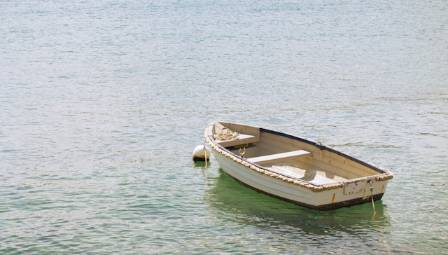
A woman named Linda entered my life in Fort Myers. The 22-foot C-Dory had no shower and no permanently installed toilet, so I sold it and purchased a 25-foot C-Dory equipped with a 200-hp Suzuki, a shower, a proper toilet and marine air conditioning.
Linda and I had a fantastic time together. However, she also had a wonderful dog named Wookie, and the dog introduced a few unexpected complications of her own.
The Lock Incident
One memorable incident happened at a lock. I went through 179 locks during the journey, and at nearly all of them, you either tie up or take hold of lines on the starboard side.
But when we reached a lock on the Rideau Canal while traveling north toward Ottawa, there was no room to wait on the starboard side. There was only a pile of rocks. On the port side, however, there was a small floating dock.
I turned the boat around because my fenders were positioned on the starboard side. That left the boat facing away from the lock.
The dockmaster told me that I needed to face the lock and therefore had to reposition the fenders. The boat was in neutral and secured to the dock. Linda and I stepped onto the dock to move the fenders.
That was when Wookie stepped onto the throttle and sent the boat charging forward at full speed.
The bow line snapped, causing the front of the boat to swing away from the dock. I reached out with my right hand in an attempt to catch the boat, but the boat won that contest.
Fortunately, the stern line remained attached. I jumped back onto the boat and stopped the engine by pulling the emergency shutoff cord.
And then I killed the dog. Just kidding.
There was no damage to the boat. My right shoulder, however, suffered considerably. Once I returned to Fort Myers, I required two rotator cuff surgeries, and my bicep tendon also had to be reattached.
Managing the Mississippi River
During this second Loop journey, the Mississippi River was running at 5.2 mph. The biggest concern was floating logs and other debris. When traveling upstream, that debris approaches you even faster.
Our small boat had another advantage when dealing with the river’s whirlpools. The deeper a boat’s hull sits in the water, the more strongly those whirlpools can influence it. In some cases, they can even turn a boat completely around.
Our smaller boat, by comparison, could move across the surface and pass over them more easily.
The People You Meet Along the Way
One of the things I enjoy most about the Great Loop is the friendships you develop.
During my second Loop with Linda, I traveled much more slowly than I had the first time. Instead of finishing in about four months, I took approximately six months. I spent more time enjoying each destination and stayed longer in places I liked.
When we traveled from Mackinac Island toward the Wisconsin side of Lake Michigan, the conditions were windy. Fortunately, I had become friends with a wonderful couple from Wisconsin who owned a 45-foot Sea Ray.
I followed behind their boat, allowing them to absorb most of the waves and swell while I enjoyed a smoother ride behind them.
One of the most memorable friendships I formed was with a couple who had completed the Great Loop 34 times.
There were also moments when anchoring somewhere became an unforgettable experience. One of the best happened near the Statue of Liberty.
I found a protected spot away from the Staten Island Ferry and woke up at exactly the right moment to watch the sunrise. I have an amazing video that slowly moves from the Manhattan skyline across to the Statue of Liberty. It was an absolutely magnificent moment.
A Mostly Trouble-Free Mechanical Experience
Apart from one encounter with a log, I had virtually no mechanical problems during that Loop. The impact bent the propeller, but fortunately the boat continued operating.
I had a spare propeller with me, so the problem was manageable.
The TomCat
More recently, I purchased another 25-foot C-Dory, but this time I chose a catamaran called the TomCat.
It has two engines, which gives me another way to maneuver the boat. I can steer with the wheel, or I can put one engine in forward and the other in reverse. There is also a joystick that makes docking considerably easier.
Wookie should even be able to operate the joystick with her nose.
I also find that the TomCat provides a smoother ride because its twin hulls cut through smaller waves more effectively. The sleeping area is larger than a queen-size bed, giving me considerably more room.
The boat is powered by twin Suzuki 140s. Some people would probably recommend more horsepower, but I prefer these engines because they are lighter and have shorter propeller shafts. That means I can travel into shallower water without having to tilt the engines.
I no longer plan to spend much time in large, exposed bodies of open water. These days, I prefer a quieter and less expensive style of cruising, and part of that means using less fuel.
More on the wire
LOG · en
Needle Felting as a Therapeutic Art: Cultivating Mindfulness and Expressing Emotions (Rewritten & Expanded)
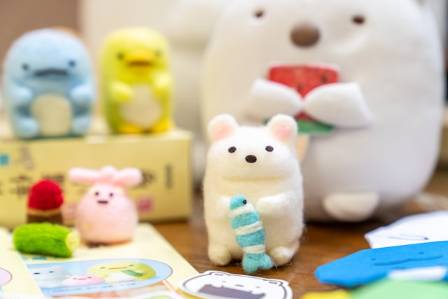
In an era defined by constant digital stimulation, overwhelming work demands, and pervasive anxiety, the search for tangible, grounding creative outlets has never been more urgent. Needle felting—an ancient craft that involves sculpting wool fibers into solid forms using barbed needles—has emerged as a beloved therapeutic practice, bridging the gap between creativity and mental well-being. Unlike high-pressure artistic pursuits that require advanced skills or expensive materials, needle felting is accessible to beginners, offering a low-stakes space to engage with one’s hands, focus the mind, and process complex emotions. What makes this craft uniquely therapeutic is its combination of repetitive motion, tactile engagement, and creative agency: as you poke the needle into the wool, you not only shape a physical object but also untangle emotional knots, finding calm in the rhythm of the process. In this expanded exploration, we will delve into the scientific and psychological foundations of needle felting’s therapeutic power, examine how it facilitates emotional expression, detail its key mental health benefits, guide beginners through their first steps, and explore its growing role in modern wellness practices. Whether you are seeking relief from stress, a way to express unspoken feelings, or simply a break from the chaos of daily life, needle felting offers a gentle yet profound path to healing and self-discovery.
LOG · en

Moose: The Largest Deer Species in the World
Moose are the largest members of the deer family.
LOG · en
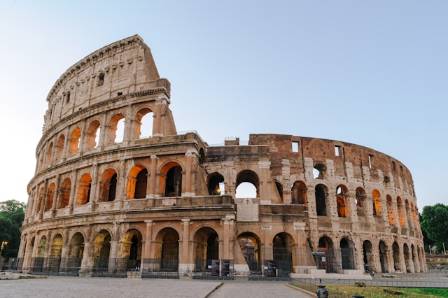
Facts about the Colosseum
Do you like sports and enjoy supporting your favourite team or athlete? The people of Ancient Rome were big fans of exciting competitions, too. One of the most famous places where they gathered for entertainment was the Colosseum, an enormous arena that remains one of the best-known landmarks of the ancient world.
LOG · en
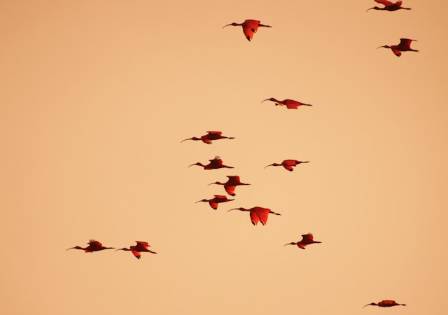
Discover the Shocking Secret of the Brilliant Scarlet Ibis and South Americas Most Beautiful Mangrove Bird
The animal kingdom holds many incredible wonders. Among these is the magnificent scarlet ibis. This creature belongs to a large avian family of twenty-nine distinct species. It captures the imagination with its brilliant red plumage. These birds occupy an incredibly vast geographical range. You can easily find them along the coastal wetlands of Colombia and Venezuela. They also thrive across Guyana, Suriname, and French Guiana. Massive flocks also color the skies of Brazil and Trinidad. This entire region shares a deep history with native peoples. The ancient Tupi People have shared this land for thousands of years. They call this iconic red bird the Guará. To these indigenous communities, the creature represents a powerful spiritual presence. It connects their daily lives with the spirit world.
LOG · en
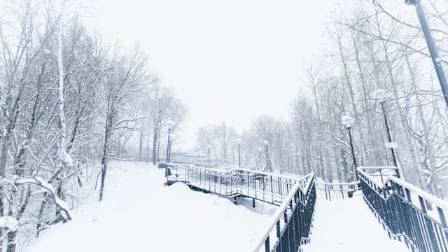
Winter Wonderland Destinations
Some places transform into magical landscapes when winter arrives, turning into true winter wonderlands. These destinations, draped in snow or iced with frost, showcase the beauty of the colder months. Here are a few of the most breathtaking winter locations from around the world.
LOG · en
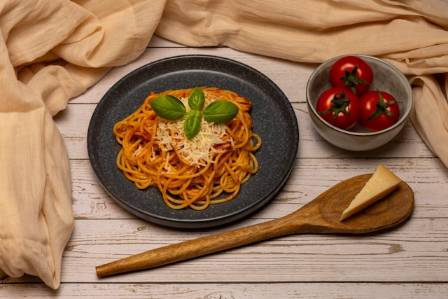
Tomato Basil Pasta That’ll Make You Forget Fast Food
There’s something incredibly satisfying about a plate of pasta coated in juicy tomatoes and aromatic basil. I still remember serving this Tomato Basil Pasta to friends for the very first time. The comforting aroma of garlic and onions cooking in olive oil filled the kitchen, while the simmering tomatoes created a cozy, homemade atmosphere that instantly brought everyone together. Since then, this easy pasta dish has become one of my favorite go-to meals for hectic evenings when takeout simply doesn’t compare.