Wire dispatch
Submersibles for Deep Sea Exploration
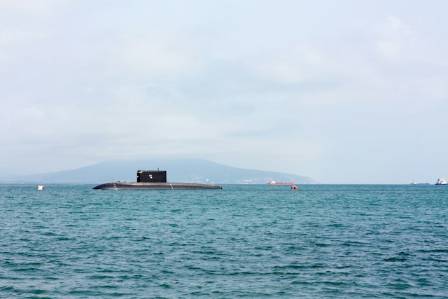
The terms submarine and submersible are both commonly used for underwater vehicles designed to operate beneath the ocean surface for purposes such as scientific research, observation, and exploration.
Isella Corbin
Wire note
Signal tip
The full dispatch write-up continues below on the discovery terminal.
Channel
Discovery Wire
The terms submarine and submersible are both commonly used for underwater vehicles designed to operate beneath the ocean surface for purposes such as scientific research, observation, and exploration.
Background
Human curiosity has continually encouraged people to explore unfamiliar environments, and the enormous oceans have long attracted explorers. From early sailors crossing open waters in search of new territories to divers investigating underwater environments, the desire to understand the sea has remained strong. As submarine technology has progressed, deep-ocean exploration has expanded considerably, allowing scientists to reach greater depths and conduct research for longer periods. Improvements in battery technology, sonar accuracy, and laser-based imaging have given researchers more effective tools for deep-sea mapping, marine ecosystem studies, and investigations of ocean resources.
Marine exploration is essential to improving our understanding of the natural world. For instance, research into the teeth of sea limpets has revealed a material that can exceed titanium and spider silk in strength. The discovery of hydrothermal vents in 1977 also transformed scientists’ understanding of the deep ocean. These vents helped explain processes such as mineral deposit formation and led to the identification of extremophiles, organisms capable of surviving by using chemicals released from the vents.
Many of these discoveries would not have been possible without underwater vehicles. Both crewed and uncrewed submersibles allow researchers to observe, collect, and analyze features of the deep ocean that would otherwise be extremely difficult to reach. Organizations ranging from the Woods Hole Oceanographic Institution in Massachusetts to the Monterey Bay Aquarium Research Institute in California rely on these vehicles as important tools for marine research.
The Woods Hole Oceanographic Institution, commonly known as WHOI, focuses on understanding the oceans and their influence on the planet and human society. Its scientists and engineers use underwater vehicles to investigate subjects including ocean climate interactions, marine chemistry, ocean resources, and biology. WHOI also participates in international research programs such as GEOTRACES, which seeks to improve scientific knowledge of ocean circulation and the distribution of important elements and resources.
The Monterey Bay Aquarium Research Institute, or MBARI, is another major center for ocean research. Its scientists use a broad collection of sensors, including ultraviolet spectrophotometers, biophysical sensors, and carbon dioxide sensors, to monitor underwater environments. Their work includes examining organic carbon movement through Monterey Canyon, studying chemical exchanges near the seafloor, and observing ocean currents and physical conditions. MBARI's research programs emphasize biogeochemical cycles, ecosystem processes, ocean visualization, and continued deep-sea exploration.
Although these institutions have different research priorities, they share an important feature: extensive use of submersibles. Different underwater vehicles allow scientists to select equipment according to the requirements of each mission. Crewed submersibles can be particularly useful when direct observation and sampling are required, while automated systems are well suited for long-term environmental monitoring. Remotely operated vehicles also provide another option for conducting research without placing people inside the vehicle. The variety of available submersibles demonstrates how underwater technology has developed to meet the growing demands of ocean science.
Manned Submersibles
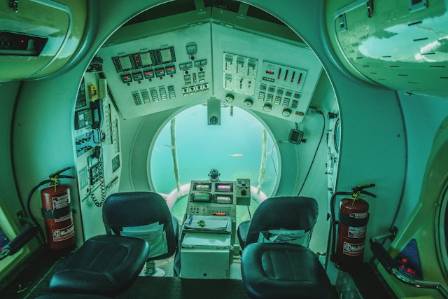
Manned submersibles are operated by a pilot and, depending on their design, may accommodate additional passengers or co-pilots. Modern crewed vehicles can reach depths of approximately 6,000 meters, giving researchers direct access to some of the deepest regions of the ocean.
Alvin is one of the earliest deep-sea submersibles capable of carrying people. Operated by Woods Hole since 1964, its first untethered mission reached a depth of only 35 feet. Over decades of upgrades, improvements to its pressure hull, life-support equipment, and other systems have greatly expanded its capabilities. Alvin can now descend to approximately 14,700 feet and remain underwater for as long as 72 hours. The vehicle has completed more than 4,000 dives and transported over 13,000 people into the deep ocean.
Continuous modernization has allowed Alvin to remain an important research platform. New lighting and imaging equipment, along with upgraded batteries, have improved its scientific capabilities. The vehicle uses video cameras, hydraulic manipulator arms, sediment and water samplers, and chemical sensors. Its manipulators and sampling equipment allow researchers to collect biological and geological material, while the chemical instruments provide immediate environmental measurements.
As part of an electrical upgrade supporting brushless motors for propulsion, ballast, and hydraulic systems, Alvin's original 60/30 VDC arrangement was changed to a 120/28 VDC configuration. VDC refers to direct-current voltage, with the updated system supplying 120 volts of direct current and a secondary 28-volt circuit.
During one expedition, Alvin traveled through a submarine canyon in the central Oregon subduction zone and identified fluid vents that suggested venting and thrust faulting could occur within the canyon. The submersible also investigated similar formations in the Gulf of Mexico. Three-dimensional seismic surface imaging was used to identify possible areas of interest, while later research showed that carbonate formations at hydrocarbon seep locations had produced solid seafloor structures.
DeepWorker 2000 is another crewed submersible, designed for a single occupant and powered by batteries. Measuring approximately 8.5 feet long and 5.75 feet high, the compact vehicle is capable of carrying out a wide range of underwater operations. Its equipment includes electronic monitoring systems inside the cockpit, a VHF multichannel radio for communication with the surface, sonar, high-definition cameras, and laser measuring equipment.
A touchscreen interface allows the pilot to control functions such as lighting and monitor depth. One of the vehicle's useful characteristics is the combination of sonar and laser technology, which enables the pilot to obtain information about areas that may not be directly visible. Like Alvin, DeepWorker 2000 has manipulator arms that can handle equipment and samples, including wildlife containers and coral analysis instruments. However, its arms can be adapted for different missions by fitting them with specialized tools.
The vehicle can provide approximately 80 person-hours of life-support capability, making DeepWorker 2000 a flexible platform for a range of scientific activities.
Mir I and Mir II are three-person submersibles capable of reaching depths of approximately 20,000 feet, giving them access to roughly 98 percent of the ocean floor. Although both vehicles have viewing windows, much of their scientific information is obtained through cameras and manipulator arms used for biological and geological sampling.
The video capabilities of the Mir vehicles have made them useful to both scientists and filmmakers. James Cameron used the two submersibles during work associated with Titanic, while scientific missions have included surveys of World War II shipwrecks and documentation of the seafloor near the North Pole.
Unlike the relatively portable DeepWorker 2000, the Mir vehicles require a dedicated support vessel for deployment. Their paired operation provides an additional advantage, because one submersible can assist or provide backup for the other. The vehicles can also support one another by supplying additional lighting and other equipment when necessary.
Pisces IV and Pisces V are two submersibles operated by the Hawaiian Undersea Research Laboratory that specialize in acoustic signal localization. Like other crewed submersibles, they are equipped with high-definition cameras and mechanical arms, but their distinguishing feature is a pinger receiver system.
The system can detect signals ranging from 8 to 80 kHz. This allows the vehicles to locate one another, find lost scientific instruments, and return to seafloor monitoring stations equipped with pingers or transponders. The Pisces vehicles have helped recover lost equipment containing valuable long-term datasets. They have also contributed to the discovery of historical wrecks, including Japanese aircraft carriers and submarines from World War II. Their acoustic locating capabilities make them particularly useful for underwater object recovery and navigation.
Remotely Operated Submersibles
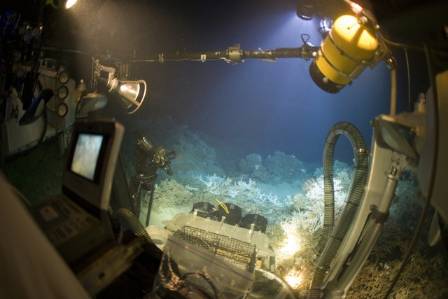
Remotely operated vehicles, commonly called ROVs, are uncrewed underwater systems connected to a surface vessel or shore-based control station through a tether. Operators control the vehicles remotely while using onboard instruments to observe the environment and gather scientific information.
ROVs provide several advantages because they eliminate the need to place people inside the vehicle and can carry extensive collections of instruments. Their large equipment loads, however, can make them considerably larger than many other underwater vehicles. Operating a sophisticated ROV can also require several people with different responsibilities.
ROPOS is an ROV designed for both shallow-water and deep-water operations. When working below approximately 350 meters, the vehicle is lowered inside a steel cage to the required depth before leaving the cage to conduct its mission while remaining connected by a tether.
ROPOS carries a broad selection of scientific equipment. In addition to cameras and manipulator arms, it uses sonar and telemetry systems. Specialized instruments can also be installed, including hot-fluid samplers, chemical scanners, rock-coring drills, and laser-illuminated cameras. This combination of equipment enables scientists to perform many different kinds of investigations and respond to unexpected discoveries during a dive.
Because ROPOS collects and processes a large quantity of information, several specialists may be involved in operating the vehicle. A scientist can direct the pilot and manipulator operator during sampling activities while also providing observations for the video record. The manipulator operator manages the scientific tools, while a data logger identifies important measurements and events. This division of responsibilities helps organize the large amount of information generated during an expedition.
Hercules is another ROV originally developed to locate and investigate objects and artifacts on the seafloor. Its role has since expanded to include research into marine biology and geology. The vehicle carries many of the instruments commonly found on scientific ROVs, while one of its notable features is its ability to remain operational for as long as 24 hours.
Extended operating periods allow scientists to gather information over longer intervals. During missions, scientists, pilots, and technical operators can rotate shifts so that the vehicle continues working while personnel rest.
Hercules also has telepresence capabilities. Using an antenna and data-transmission system, the vehicle can send high-definition video and scientific information back to a research facility on shore. This allows researchers and students to participate in an expedition without physically traveling to sea.
High-resolution mapping presents another challenge for ROV operations. Underwater light is strongly affected by attenuation and backscatter, meaning that large numbers of photographs may be necessary to document extensive areas. In some situations, hundreds or thousands of images are needed to cover a region adequately.
Self-consistent bathymetric mapping provides one approach to this problem. Instead of depending entirely on optical images, sonar is used to create acoustic representations of the seafloor. Combining visual photographs with acoustic information can produce a clearer representation of underwater objects and terrain even when water conditions limit optical visibility.
MBARI operates several ROVs for research in Monterey Canyon, an enormous underwater canyon comparable in scale to the Grand Canyon. Located roughly two miles below the ocean surface in some areas, the canyon contains a remarkable variety of marine life. ROV operations have enabled researchers to observe elusive organisms such as vampire squid and barreleye fish, sometimes referred to as spook fish.
MBARI emphasizes uncrewed underwater vehicles, reflecting David Packard's belief that ROVs could provide many of the capabilities needed for deep-sea exploration while avoiding direct risks to human occupants. Among MBARI's ROVs are Ventana and Doc Ricketts.
Ventana, whose name refers to the idea of a window into the deep ocean, collected its first sample in 1988. Since then, it has undergone numerous modifications and received additional scientific instruments. The vehicle can measure physical characteristics of seawater at depths reaching approximately 1,700 meters while retaining standard equipment such as cameras, sonar, and manipulator arms.
Its specialized instruments include a transmissometer for measuring the attenuation of light in seawater, flowmeters for monitoring water movement, and oxygen sensors. These tools allow Ventana to collect biological and geological samples while simultaneously examining the chemical and physical properties of the surrounding deep-ocean environment.
Doc Ricketts is another MBARI ROV capable of reaching depths of approximately 4,000 meters, or about 2.5 miles. Its greater operating depth allows researchers to examine environments that are beyond the reach of many other ROVs. Like other research vehicles, it is equipped with manipulator arms, high-definition cameras, and additional scientific instruments.
Overall, ROVs have become important research platforms because they can carry extensive scientific equipment while allowing researchers to conduct deep-sea investigations without placing human pilots directly in the underwater environment.
Automated Underwater Vehicles
Automated underwater vehicles, or AUVs, represent another major category of submersibles used for ocean exploration. Unlike crewed vehicles and ROVs, AUVs are programmable systems that operate independently without continuous piloting. Depending on their design, they can move using propellers, glide through the water, or drift with ocean currents.
AUVs are useful because they do not require a pilot to remain inside or continuously control the vehicle. Their relatively compact designs also allow them to travel considerable distances and remain underwater for extended periods. One limitation is that their size and energy requirements generally restrict the amount of equipment they can carry compared with larger research submersibles.
AUVs can be programmed to survey and map the seafloor while collecting measurements such as water temperature and salinity. Examples include Remote Environmental Monitoring Units, or REMUS vehicles, Sentry, Spray Gliders, and Slocum Gliders.
REMUS vehicles use propellers and fins for movement, steering, and diving. Acoustic navigation systems and onboard sensors allow them to survey underwater environments and record scientific data. Different REMUS models are designed for different missions and may carry specialized equipment.
One example is SharkCam, which combines cameras and tracking equipment to follow tagged marine animals such as great white sharks. This allows researchers to observe animal movements and behavior over underwater areas that would be difficult to monitor continuously from a surface vessel.
Sentry is a versatile AUV capable of creating detailed depth information and magnetic maps of the seafloor. It can also photograph geological structures such as deep-sea hydrothermal vents. The vehicle is designed to function under demanding conditions, including environments around volcanic calderas.
For navigation, Sentry combines a Doppler velocity log with an inertial navigation system and an acoustic navigation system. These technologies work together to help the vehicle maintain an accurate position while operating independently underwater.
Spray Gliders are designed primarily to measure oceanographic conditions, including temperature, salinity, pressure, and turbidity. They can also determine ocean-current velocities and provide information about chemical and biological conditions in seawater.
Long-term Spray Glider observations in the southern California Current System have contributed to numerical studies of poleward-flowing currents. A typical mission can involve diving to approximately 500 meters, with an individual dive lasting around three hours.
The gliders can carry a conductivity-temperature-depth sensor, an acoustic Doppler profiler, and a chlorophyll-a fluorometer. The temperature and depth measurements help identify warm and cold water movements, while the fluorometer measures algae concentrations and can provide information about biological material moving with ocean currents.
The Slocum Glider is another long-range underwater vehicle designed for regional oceanographic surveys. It can remain at sea for weeks during a single mission, allowing researchers to collect observations across large areas without requiring continuous human control.
However, prolonged exposure to seawater and repeated temperature changes can affect the performance and measurement accuracy of the vehicle. Research facilities such as the Centro di Taratura Oceanografico in Italy use laboratory simulations to examine how environmental conditions influence glider measurements.
During these experiments, a testing bath circulates saltwater while the temperature is changed from 30°C down to 0°C in 5°C increments. This produces conditions that resemble some of the environmental changes encountered during ocean missions. By examining data collected under controlled conditions, researchers can determine how temperature and salinity variations influence the quality of AUV measurements.
The AUVs described above provide an important alternative to crewed and remotely operated systems. Their programmable operation allows them to gather information over long periods with limited human involvement during the actual mission. This makes them especially useful for broad-scale ocean monitoring and repeated environmental observations.
Conclusions
The development of different types of submersibles has greatly expanded our ability to investigate the world's oceans. Crewed, remotely operated, and autonomous vehicles each contribute different capabilities to marine science, allowing researchers to study everything from marine animals and seafloor geology to chemical conditions and ocean circulation.
These underwater systems have supported research ranging from tracking marine wildlife to examining chemical processes and geological structures on the seafloor. As submarine and submersible technology continues to develop, the ability to combine sensors, imaging systems, navigation equipment, and autonomous control should further expand the scope of marine exploration.
Future AUVs may be capable of reaching greater depths while remaining underwater for substantially longer periods. At present, some vehicles can reach extreme depths but cannot remain there for as long as many autonomous platforms. Developing autonomous systems capable of conducting deep-ocean monitoring for 24 hours, several days, or even a week could provide scientists with much more continuous information about the seafloor and surrounding environment.
In the longer term, autonomous underwater technology could also become more accessible outside professional research. Personal underwater vehicles could potentially give divers new ways to document underwater environments, allow people at the surface to observe marine life remotely, and create new possibilities for teaching marine biology through direct observation of the ocean.
More on the wire
LOG · en
Why Cats Make Remarkable Companions
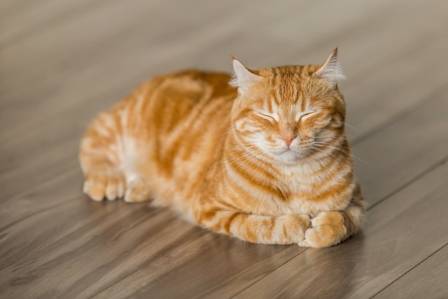
The debate between feline and canine lovers is as old as pet ownership itself. While dogs often take the spotlight with their exuberant personalities, cats offer a quieter, more subtle charm that’s just as endearing. If you've always leaned toward dogs, you might find your perspective shifting after discovering the unique benefits of sharing your space with a cat.
LOG · en
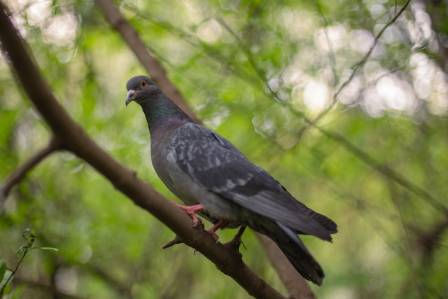
Pink-necked green pigeon
The pink-necked green pigeon (Treron vernans) is a bird species belonging to the pigeon and dove family, Columbidae. It is one of the more widespread green pigeons in Southeast Asia, occurring from Myanmar and Vietnam southward through the major islands of Indonesia and the Philippines.
LOG · en
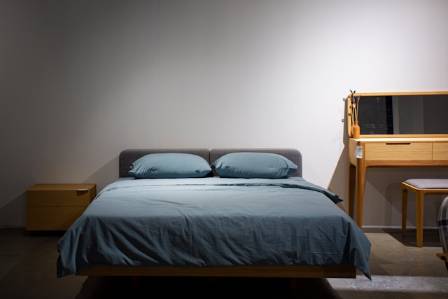
How Upgrading to an Extra Large Bed Can Revolutionize Your Sleep and Bedroom Decor
Selecting the correct proportions for a sleep surface completely alters both nightly rest and the layout of a bedroom. An extra-large bed offers significant advantages, primarily centered on unparalleled physical comfort. By providing much more width and length than standard double or queen models, it allows couples to shift positions freely throughout the night without waking one another. Minimizing these micro-awakenings directly leads to deeper sleep cycles, which are vital for daily cellular repair, stress reduction, and overall cognitive wellness. Furthermore, the expansive surface area naturally accommodates high-performance mattresses, including specialized memory foam and orthopedic designs that provide targeted anatomical support. This superior structural alignment helps keep the spine in a neutral position, which gradually alleviates chronic back discomfort, reduces morning joint stiffness, and corrects poor posture. The increased space also enhances blood circulation by allowing individuals to fully extend their limbs, resulting in a healthy and therapeutic resting environment that directly contributes to long-term physical wellness.
LOG · en
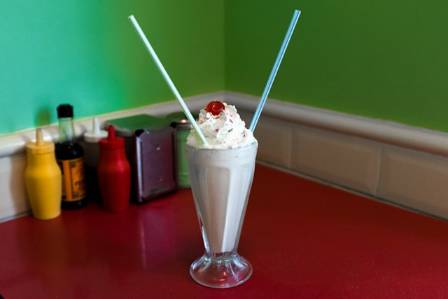
The Complete History of Milkshakes
Indulge in the complete history of milkshakes—a treat that everyone, both young and old, loves! How can you not?
LOG · en
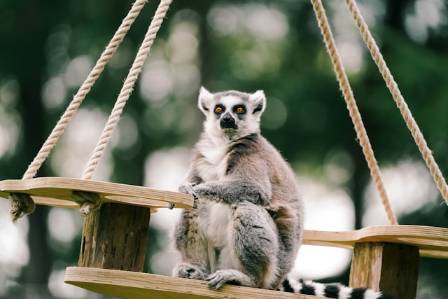
The Striped-Tailed Survivors with a Wild Side
Ring-tailed lemurs have a distinct breeding period that generally takes place during spring, from September through November. When females are ready to mate, their genital area becomes swollen, providing a visible indication of reproductive receptivity. Males compete for opportunities to mate with receptive females through vocal displays and, at times, confrontations with other males.
LOG · en
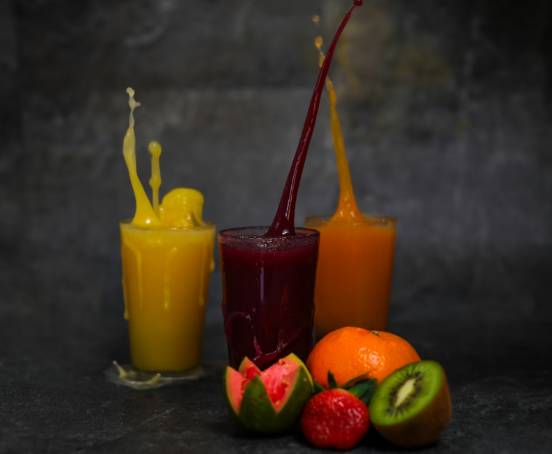
Best Juice Flavours for Every Season
The best juice flavours are the ones that suit the moment. A chilled citrus drink on a hot summer day feels very different from a rich pomegranate juice on a cold winter evening—yet both are perfect in their own way.