Wire dispatch
Everything you need to know about the Venus flytrap
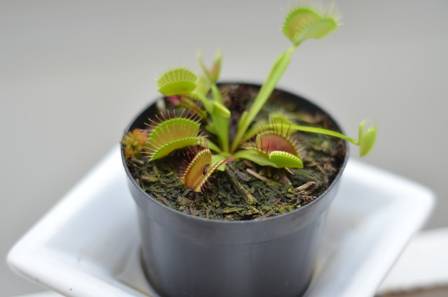
The Venus flytrap, scientifically known as Dionaea muscipula, is one of the most unique carnivorous plants in the world. Even today, its unusual feeding behavior continues to intrigue scientists and plant enthusiasts. The plant’s remarkable ability to capture and digest insects comes from its specialized trapping leaves, which are responsible for its famous and intimidating name.
Owen Parker
Wire note
Signal tip
The full dispatch write-up continues below on the discovery terminal.
Channel
Discovery Wire
The Venus flytrap, scientifically known as Dionaea muscipula, is one of the most unique carnivorous plants in the world. Even today, its unusual feeding behavior continues to intrigue scientists and plant enthusiasts. The plant’s remarkable ability to capture and digest insects comes from its specialized trapping leaves, which are responsible for its famous and intimidating name.
Origins of the Venus Flytrap
The story of the Venus flytrap dates back to 1769, when it was discovered in the coastal wetlands of North Carolina. John Ellis, a member of the East India Company who worked with plant transportation, became fascinated by the unusual species and wrote about it in a letter to the well-known botanist Carl Linnaeus.
In his description, Ellis named the plant Dionaea muscipula. The name was inspired by the Greek goddess Diana, who was associated with Venus in Roman mythology, while muscipula is a Latin word meaning “mousetrap.”
The plant’s evolution remains partly mysterious because no complete fossil record of the species has been found. However, researchers believe that the Venus flytrap evolved from smaller flowering plants that gradually developed larger traps to capture and consume prey more efficiently.
How Does a Venus Flytrap Capture Its Prey?
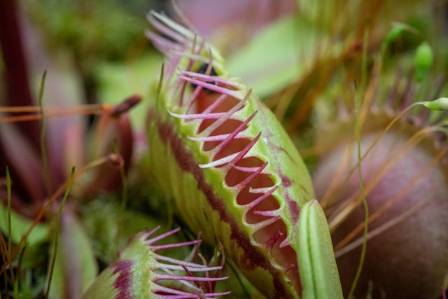
The inside surface of the Venus flytrap’s leaves produces sweet nectar that attracts insects such as flies, spiders, and other small creatures. Located in the center of each trap are three tiny trigger hairs, known as trichomes, which act as the plant’s detection system.
When an insect touches these hairs twice within about 20 seconds, or repeatedly stimulates one hair in a short period, the two sides of the trap rapidly snap shut, capturing the prey in less than a second. These sensitive structures are highly advanced because they can tell the difference between actual prey and harmless objects, such as raindrops or small pieces of debris.
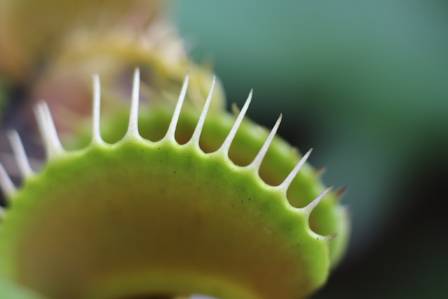
Along the edges of the trap are stiff structures called cilia. Once the trap closes, these hair-like projections lock together and prevent the insect from escaping. The more the trapped insect struggles, the tighter the trap seals around it.
After the trap fully closes, it functions like a digestive chamber. The plant releases enzymes, including substances involved in breaking down proteins, to dissolve and absorb nutrients from the insect. Digestion usually takes several days and may last up to ten days depending on the size of the prey. When the process is complete, the trap opens again and leaves behind the insect’s hard outer shell.
Venus Flytrap Care Requirements
Although Venus flytraps can be grown indoors, they are considered challenging houseplants because they require very specific conditions. They need plenty of sunlight, usually around twelve hours of direct light each day. During autumn, when daylight decreases, the plant naturally enters dormancy and survives through its underground structures.
For watering, rainwater or distilled water is recommended because tap water often contains minerals that can harm the plant. Since Venus flytraps naturally obtain nutrients from insects, they should not be grown with regular fertilizer.
When kept as houseplants, they need occasional feeding with live insects. They grow best in nutrient-poor growing mediums such as peat moss, sphagnum moss, or specially prepared carnivorous plant soil.
Venus Flytrap Flowers and Seeds
Venus flytraps are perennial plants, meaning they can return and grow again year after year. During the flowering season, they produce delicate white flowers that can develop into seeds after successful pollination.
Producing flowers requires a significant amount of energy, so the plant’s growth may slow during this period. Gardeners who want stronger traps often remove flower stalks early, allowing the plant to focus more energy on leaf and trap development.
More on the wire
LOG · en
Recent Findings on Pesticide Residues in Indonesian Rice
A study released in the publication Future of Food: Journal on Food, Agriculture and Society examined organic and conventionally grown rice from Indonesia for pesticide traces. Chemical residues were identified solely in the conventional rice samples.
LOG · en
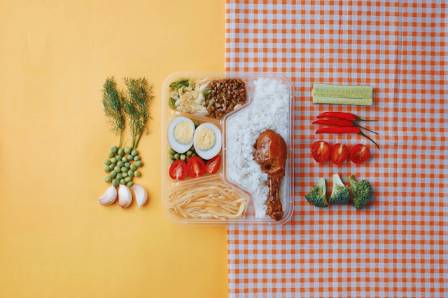
An Introductory Guide to the Heritage of Japanese Bento Boxes
For enthusiasts of Japanese gastronomy or those who have explored the nation's rich traditions, the concept of the bento box is likely familiar. Essentially, an "obento" refers to a meal systematically arranged within a specialized portable container, designed for consumption away from home.
LOG · en

6 Health and Well-being Benefits of Cat Companionship
The following article on the health benefits of owning a cat will be renovated to adopt a storytelling approach, creating a more engaging narrative for readers to immerse themselves in.
LOG · en

The Ultimate Mattress Buying Guide: 16 Essential Questions for Better Sleep
Selecting a new mattress is a significant investment that directly impacts your quality of life. Given that you will spend roughly one-third of your time on this surface, finding a balance between support, comfort, and lifestyle compatibility is vital. To navigate the vast market effectively, you must evaluate your specific needs and preferences before making a purchase.
LOG · en
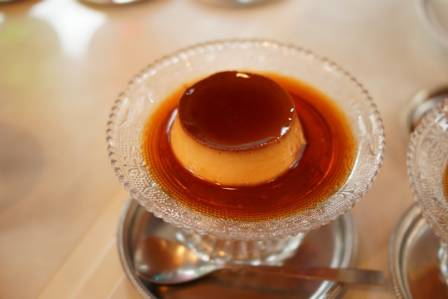
Delicious caramel pudding
Whenever I think of caramel pudding, memories of my grandmother’s kitchen come rushing back—the soft clinking of her mixing bowls, the aroma of sugar turning golden and filling the cozy farmhouse. This dessert was always a labor of love, a simple yet heartwarming treat in a ramekin. Today, I’m thrilled to share her treasured recipe with you.
LOG · en

The Best Full-Size Pickup Trucks to Buy
Despite constant talk about electrification and tightening emissions rules, one thing in the U.S. hasn’t changed: full-size pickup trucks remain extremely popular. Buyers continue to prioritize capability, space, and versatility, and manufacturers are locked in intense competition to meet those expectations. For the 2026 model year, changes are relatively modest overall, but the segment is always evolving, and each brand knows it must stay sharp to remain competitive in the long run.