Wire dispatch
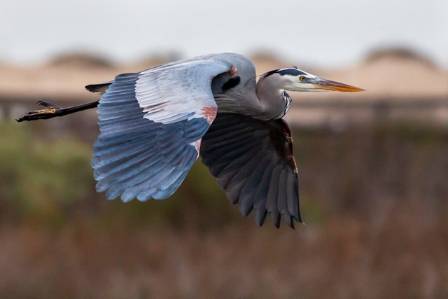
Black-Crowned Night Heron
The first Black-crowned Night Heron arrived with a serious wing and shoulder injury that occurred in the wild, leaving it unable to return to its natural habitat. It became part of the collection in 2016.
Rebecca Turner
Wire note
Signal tip
The full dispatch write-up continues below on the discovery terminal.
Channel
Discovery Wire
The first Black-crowned Night Heron arrived with a serious wing and shoulder injury that occurred in the wild, leaving it unable to return to its natural habitat. It became part of the collection in 2016.
The second heron was born in captivity at the Salisbury Zoo on April 13, 2005. It was later transferred to CuriOdyssey in 2016.
Interesting Facts About Black-crowned Night Herons
Black-crowned Night Herons are highly skilled at a hunting technique often called “still fishing.” They can remain completely motionless for long periods while standing in shallow water, resting on pilings during high tide, or waiting on floating docks.
While patiently watching their surroundings, they wait for the right moment to strike. Once prey comes within reach, they quickly extend their sharp bills into the water to capture small fish.
The bird’s scientific name, Nycticorax, means “night raven.” This name refers to the heron’s habit of being active after dark and its call, which resembles the sound of a raven.
What Do Herons Eat?
Black-crowned Night Herons have a varied diet and feed on many different types of animals.
Their natural food sources include fish, aquatic insects and other invertebrates, amphibians, reptiles, and small mammals.
At CuriOdyssey, the herons receive a specially prepared diet that includes smelt, softened kibble, hard-boiled eggs, and mealworms.

How Long Do Herons Live?
In their natural environment, Black-crowned Night Herons usually live for about 5 to 10 years.
When cared for in captivity with proper nutrition and veterinary support, they can live much longer, commonly reaching 10 to 17 years.
Habitat and Distribution
Black-crowned Night Herons live in a variety of wetland environments, including freshwater areas and brackish marshes.
They have a very wide global distribution and can be found on most continents except Australia, as well as regions dominated by taiga forests and tundra.
In the Americas, their range extends from southern Canada through Central America and into South America.
Conservation Status
Black-crowned Night Herons are protected under the U.S. Migratory Bird Treaty Act.
Although they are not currently considered endangered, these protections help safeguard the species and support the conservation of their wetland habitats.

More on the wire
LOG · en

Artistic Fauna: 15 Watercolor Projects for Animal Lovers
The discipline of watercolor painting spans a vast spectrum, ranging from fluid, ethereal forms to meticulous, lifelike representations. The following fifteen animal-themed projects are designed to refine your technical abilities while helping you capture the essence of various creatures, from majestic wild cats to vibrant, multi-colored pets.
LOG · en

Top 5 of the Most expensive VW Beetles
When the unassuming Volkswagen Beetle first made its way to Canada, it debuted with an accessible price tag: less than 1,600 US dollars for a brand-new model. Today, the iconic “Bug” has shattered auction records, with a Beetle customized to resemble the famous movie car Herbie selling for a staggering USD 212,500. That’s what you call an extraordinary return on investment.
LOG · en

Dancing Lights Above
In the darkest months of winter, when the sun doesn't rise above the horizon in the polar regions, the night sky comes alive with a breathtaking natural phenomenon—the aurora borealis. These shimmering ribbons of light, often in shades of green, pink, and purple, dance across the heavens, creating a spectacle that has captivated human imagination for centuries. But beyond their beauty, auroras are a window into the dynamic interactions between our planet and the cosmos.
LOG · en

The Essence of Men’s Artistic Gymnastics: A Comprehensive Guide to the Six Disciplines
Men’s artistic gymnastics (MAG) stands as the cornerstone of gymnastics, with roots tracing back to ancient Greece, where athletes trained in strength, flexibility, and precision to prepare for warfare and competition. Recognized as the oldest form of organized gymnastics, it evolved through centuries—from 19th-century European gymnasiums to its debut as an Olympic sport at the first modern Games in 1896—to become a showcase of human physical excellence. At the elite level, MAG athletes compete across six demanding disciplines: floor exercise, pommel horse, still rings, vault, parallel bars, and high bar. Each event demands a unique blend of core skills—strength, balance, coordination, agility, and mental fortitude—while pushing the boundaries of what the human body can achieve. Below is an in-depth exploration of each discipline, uncovering the technical nuances, historical context, and competitive standards that define men’s artistic gymnastics.
LOG · en

Underwater robots
Robust Object Detection for Underwater Robots via Domain Generalization.
LOG · en

Long-tailed Tits: The Tiny Birds That Travel as a Family
A crisp, high-pitched “see-see-see” sound suddenly cuts through the stillness of a winter day. Soon afterward, a handful of tiny birds come into view, their rounded bodies perched at the end of remarkably long, slender tails. They dart from branch to branch, calling back and forth, hunting for minute insects, and vanishing almost as quickly as they appeared.