Wire dispatch
Boat Navigation Lights Every Boater Should Know
Navigation lights are designed to help prevent collisions after dark and during periods when visibility is limited. They are a crucial part of boating safety, helping you identify nearby vessels while also making your own boat visible to others.
Sylvan Pierce
Wire note
Signal tip
The full dispatch write-up continues below on the discovery terminal.
Channel
Discovery Wire
Navigation lights are designed to help prevent collisions after dark and during periods when visibility is limited. They are a crucial part of boating safety, helping you identify nearby vessels while also making your own boat visible to others.
These lights can provide valuable information about another vessel, including its approximate size, what it is doing, and the direction in which it is traveling. By learning how different navigation lights are displayed, you can better determine how to respond when another boat comes into view.
Depending on the vessel, navigation lights are required to have specific colors, such as white, red, green, yellow, or blue, as well as defined lighting arcs, visibility ranges, and positions on the boat. These requirements are established by maritime laws and regulations. This guide focuses primarily on recreational vessels measuring less than 65 feet in length.
Understanding navigation lights is particularly important for small-boat operators for several reasons.
As the owner or operator, you are responsible for ensuring that your boat displays navigation lights with the correct color, brightness, position, and visibility.
You must use the required navigation lights after dark and whenever visibility is reduced.
You also need to be able to identify the type of another vessel and determine its direction of travel by observing its lights.
Legal Requirements
Boats are required to display the appropriate navigation lights from sunset until sunrise regardless of whether weather conditions are favorable or poor. During this period, vessels should not display other lights that could be confused with the navigation lights required under the Rules of the Road.
Likewise, no lighting should be used in a way that reduces the visibility or distinctive appearance of the required navigation lights or interferes with maintaining a proper lookout.
The regulations also require navigation lights to be displayed during periods of restricted visibility. They may additionally be used at other times whenever circumstances make them necessary.
It’s Your Responsibility
The owner or operator of a vessel is responsible for making sure that the boat carries the correct navigation lights for its size and the waters in which it is being operated.
This responsibility does not belong to the manufacturer, importer, or dealer who sold the vessel. Some boats may be delivered with lights that fail to comply with legal requirements regarding their technical specifications or placement.
It is also important to check the required visibility angles when the vessel is underway. If a boat normally travels with its bow raised significantly above the water, that operating attitude should be considered when navigation lights are installed or inspected.
Navigation Lights for Powerboats
A power-driven vessel that is underway is generally required to display a masthead light toward the front, sidelights, and a stern light.
Powerboats shorter than 12 metres may instead use an all-around white light together with sidelights. On the Great Lakes, power-driven vessels may use an all-around white light rather than the combination of a second masthead light and a stern light.
Sidelights
Sidelights consist of colored lights, with red displayed on the port side and green on the starboard side. Each light covers an uninterrupted horizontal arc of 112.5 degrees, extending from directly ahead of the vessel to 22.5 degrees behind the beam on its respective side.
Combination Lights
On some vessels, the red and green sidelights are incorporated into one fixture. This combined light is mounted along the vessel’s centerline.

Stern Light
The stern light is white and illuminates an uninterrupted horizontal arc of 135 degrees. It is positioned so that the center of the illuminated sector points directly toward the rear of the vessel.
Navigation Lights for Sailing Vessels
A sailing vessel measuring less than 7 metres should display the standard navigation lights whenever doing so is practicable.
If displaying the regular navigation lights is not practical, the vessel must have an electric torch or lantern readily available that produces a white light. This light must be displayed early enough to help prevent a collision.
Diving Lights
In resort destinations and in areas containing shipwrecks or reefs, you may encounter another special nighttime lighting arrangement used by diving vessels.
This configuration consists of three vertically arranged masthead lights displayed in a red-white-red sequence. When you encounter a vessel showing these lights, you should keep a safe distance because divers may be operating in the water nearby.
Interpreting What You See
Learning which navigation lights are required and when they must be displayed is only the first part of nighttime boating safety. You must also learn to interpret the lights you observe on other vessels while you are underway.
Being able to recognize these patterns quickly is essential for making safe decisions after dark.
For example, when an approaching vessel displays a particular combination of lights indicating a crossing situation, you can determine that you must give way to the other vessel. Recognizing the red light provides an important clue about the situation and your responsibilities.
Seeing a green light above a white light indicates a fishing vessel engaged in trawling. In this situation, you need to keep clear of the fishing vessel itself, while also remembering that it may have a large net extending into the water. The net can create an additional hazard that must be avoided.
There are many other navigation-light patterns and combinations that boaters need to recognize immediately. These include the lights displayed by a sailing vessel that has right of way over a powerboat, the specialized lighting used by different types of fishing vessels, and the signals for dredges or vessels that are unable to maneuver.
For safe nighttime navigation, study these requirements not only from the perspective of a boat owner who must display the correct lights, but also from the perspective of an observer who needs to identify and interpret the lights of other vessels.
More on the wire
LOG · en

Best Beach Activities for Every Group
As summer draws closer and warm days stretch well into the evening, the beach has a special way of attracting everyone. Whether you are heading out with young children, organizing a romantic getaway, or gathering your closest friends for a weekend by the sea, the shoreline has something to offer every type of group.
LOG · en

10 Practical Tips for Displaying Art in Your Home
Choose a frame that suits both the artwork and the space where it will hang. If you’re on a budget, opt for art in standard sizes (like A4, A3, or A2)—these have plenty of affordable ready-made frames available.
LOG · en

Ultimate Supercar Buying Guide
Purchasing supercars on the used or secondary market can be complicated and risky. There are many factors to evaluate and just as many pitfalls to avoid. While the checklist could be extensive, a few key principles stand out when considering a high-end performance car.
LOG · en

The Space Needle: Seattle’s Most Famous Landmark
The Space Needle is widely recognized as one of the most iconic symbols of Seattle and one of the most memorable structures in the United States. Constructed for the 1962 World’s Fair, this futuristic observation tower quickly became the centerpiece of Seattle’s skyline.
LOG · en

Scented Sachet Do's and Don'ts
Scented sachets have been used for hundreds of years. Some of the earliest examples appeared in medieval Europe, when people filled small fragrance pouches to freshen linens and help mask unwanted smells. Although the materials and designs have changed over time, the basic purpose remains unchanged: sachets provide an easy, passive method for keeping enclosed areas pleasantly scented.
LOG · en
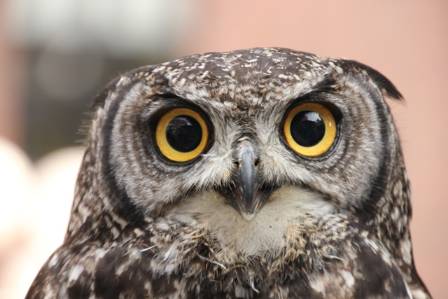
Owl Eyes Unveiled: Nature’s Nocturnal Marvels
What gives owls their trademark intense gaze? Unlike most birds, both of an owl’s eyes sit on the front of the head, creating a powerful, human-like depth perception known as binocular vision. This setup helps them zero in on prey with remarkable precision. In fact, among all birds, owls have some of the most forward-facing eyes. But their ocular superiority doesn’t stop there. Unlike us, owls possess a hidden layer of protection — a translucent third eyelid, called a nictitating membrane, which sweeps across their eyes from the inner corner. This shield guards their vision during high-speed dives and close encounters.