Wire dispatch
Electric Vehicle Charging Explained
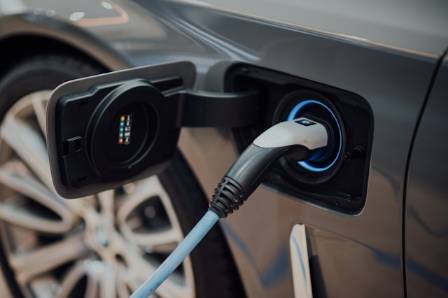
Choosing an electric vehicle (EV) allows drivers to avoid costly visits to gas stations while reducing environmental impact and improving air quality. However, switching to an EV also comes with a learning process, especially when it comes to charging. Questions about charging speed, expenses, charging locations, and connector types are common among new EV owners. This guide explains the basics of EV charging so you can better understand how to power your vehicle efficiently and confidently.
Rowan Hayes
Wire note
Signal tip
The full dispatch write-up continues below on the discovery terminal.
Channel
Discovery Wire
Choosing an electric vehicle (EV) allows drivers to avoid costly visits to gas stations while reducing environmental impact and improving air quality. However, switching to an EV also comes with a learning process, especially when it comes to charging. Questions about charging speed, expenses, charging locations, and connector types are common among new EV owners. This guide explains the basics of EV charging so you can better understand how to power your vehicle efficiently and confidently.
How Long Does It Take to Charge an Electric Vehicle?
The time required to charge an EV from an empty battery can range from around 20 minutes to more than 40 hours. The charging speed depends on several factors, including the size of the battery, the type of charger being used, and the charging environment. Electric vehicle charging is generally divided into three levels.
Level 1 Charging: Standard Household Outlet
Level 1 charging uses the regular 120-volt household outlet that is commonly used for devices such as lamps or phone chargers. Since it provides the lowest charging power, it is the slowest option and may require approximately 40 to 50 hours to fully recharge an empty EV battery.
However, many drivers may find Level 1 charging sufficient for daily use. The average American driver travels only about 31 miles per day, meaning a vehicle can often regain enough range overnight for normal commuting. This method can also be useful as a backup charging solution when faster options are unavailable.
Level 2 Charging: The Most Common Home Charging Option
Level 2 charging operates through a 220-volt outlet or professionally installed charging equipment, similar to the power supply used by large household appliances. With this setup, most EVs can be charged from empty in roughly four to ten hours.
Public Level 2 chargers are frequently available at workplaces, shopping centers, and parking facilities. Many EV owners also install Level 2 chargers at home because they can conveniently recharge their vehicles overnight.
Level 3 Charging: The Fastest Charging Method
Level 3 chargers, also called DC fast chargers or DCFC stations, provide the quickest charging speeds available today. These chargers can restore an empty battery in as little as 20 minutes, making them ideal for long-distance travel and drivers who need a quick recharge.
Although public fast chargers usually cost more than home charging, they offer valuable convenience. Earlier generations of fast chargers typically delivered around 50 kW of power, while many modern stations provide significantly higher output, with some reaching up to 350 kW.
Things That Affect Charging Speed
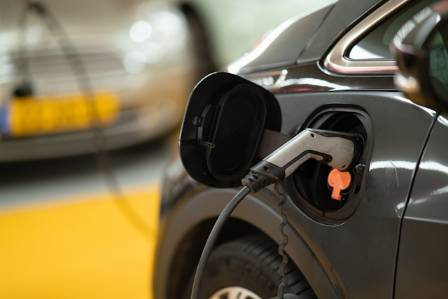
In everyday use, EV owners rarely charge their vehicles from completely empty to completely full. Most drivers simply recharge their batteries when needed, often keeping the battery level between 20% and 80% to help maintain battery health and extend lifespan.
Battery size also plays an important role. Large-capacity EVs require more time to recharge than vehicles with smaller batteries. For example, an electric vehicle with a large battery pack will generally take longer to charge than a compact EV with a smaller battery.
Another important factor is the battery’s ability to accept power. This is especially significant when using Level 3 fast chargers. Some older EV models cannot take full advantage of the highest-powered charging stations because their charging systems have lower limits.
What Types of EV Charging Plugs Are Available?
Electric vehicles use different charging connectors, similar to how electronic devices use different types of power ports. The connector type depends on the vehicle manufacturer and charging standard.
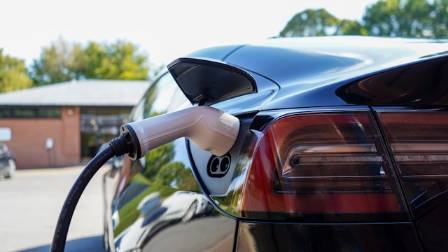
For Level 1 and Level 2 charging in the United States, most electric vehicles use the J1772 connector. Tesla vehicles are the exception, as they use their own proprietary connector system, although adapters allow compatibility with other charging equipment.
For Level 3 DC fast charging, most non-Tesla EVs use either CCS (Combined Charging System) or CHAdeMO connectors, depending on the vehicle brand. Tesla vehicles use their own charging connection for all charging levels, including Tesla Supercharger stations.
How Much Does It Cost to Charge an Electric Vehicle?
Charging an EV is usually much cheaper than buying gasoline. On average, electric vehicle owners spend significantly less on energy costs compared with drivers of similar gasoline-powered cars.
The actual charging cost depends on electricity rates, charging location, and charging time. Most EV owners charge at home, so their expenses are mainly determined by local electricity prices and how often they recharge.
To estimate home charging expenses, multiply the vehicle’s electricity consumption rate, usually measured in kilowatt-hours per 100 miles, by the electricity price listed on your utility bill. This calculation provides an estimate of the cost to drive 100 miles.
Charging overnight can reduce expenses because electricity demand is often lower during those hours. Some drivers can save a noticeable amount by taking advantage of lower nighttime electricity rates. Public fast charging stations are usually more expensive because of their convenience and higher power output.
Where Can You Find Electric Vehicle Charging Stations?
Although EV charging networks are not yet as widespread as traditional gas stations, their availability continues to grow. Government investments and private companies are expanding charging infrastructure to support the increasing number of electric vehicles on the road.
Many drivers can already find public charging stations nearby by using charging network applications. Apps such as ChargeHub, PlugShare, and Chargemap allow users to search for available stations, check connector compatibility, and locate nearby charging options.
Some charging providers require accounts or memberships before drivers can use their stations. This may involve registering through a mobile app or using a membership card.
Tesla owners can use the vehicle’s built-in navigation system to locate Tesla Supercharger stations. These chargers were originally designed exclusively for Tesla vehicles, although access has gradually expanded in some regions.
Are Electric Vehicles Worth Buying?
For many drivers, switching to an electric vehicle is a worthwhile investment. Although EV ownership requires learning new charging habits, the long-term benefits can be significant.
Electric vehicle owners can save thousands of dollars over the lifetime of their cars through reduced fuel and maintenance costs. EVs also help lower harmful exhaust emissions and reduce dependence on fossil fuels.
As charging networks continue to expand and battery technology improves, electric vehicles are becoming more practical, affordable, and convenient for everyday transportation. Understanding how charging works makes the transition to electric driving much easier and more enjoyable.
More on the wire
LOG · en

Radio Telescopes: Exploring the Invisible Universe
Just as optical telescopes gather visible light, focus it, amplify it, and make it available for study through various instruments, radio telescopes perform a similar role with radio waves. They collect faint radio emissions from stars, galaxies, black holes, and other celestial bodies, amplify these signals, and transmit them for analysis. Radio telescopes can also send radio waves to planets and moons within our solar system and measure the reflected signals.
LOG · en

The Best Sailboats for the High Seas?
At the St. Petersburg Boat Show last month, I had the opportunity to attend a presentation by delivery skipper and author John Kretschmer about what he described as sailboats designed for serious ocean passages. While I have some hesitation about creating any definitive list of “ideal” boats, Kretschmer is particularly qualified to discuss this subject. He reviews boats for Sail Magazine, and his latest book, Sailing a Serious Ocean, reflects his extensive experience at sea.
LOG · en

8 of the Best Coastal Sand Dunes You Need to Explore in California
California’s coastline is dotted with sand dunes that offer both adventure and natural beauty. From wide open spaces for play to delicate habitats teeming with plants and wildlife, these dunes provide something for every type of explorer.
LOG · en

Immersing Yourself in the Alpine Mountain Hut Experience: Tips for a Memorable Stay
Staying in a mountain hut perched in a remote and breathtaking location is an adventure to cherish. It's an experience that everyone who treasures the great outdoors should undertake at least once in their lifetime. The reasons for spending a night in a mountain hut are plenty, and they extend beyond mere convenience. These havens in the heights of nature offer a rare escape from the everyday bustle, allowing you to relish the untamed beauty of the high mountains.
LOG · en

Smart Glasses: A New Generation of Wearable Technology
Smart glasses, also referred to as intelligent eyewear or smart lens devices, have emerged as a revolutionary product that combines advanced technology, practical functions, and modern design. In today’s rapidly changing digital world, these innovative glasses are transforming the way people interact with information and their surroundings.
LOG · en

Submersibles for Deep Sea Exploration
The terms submarine and submersible are both commonly used for underwater vehicles designed to operate beneath the ocean surface for purposes such as scientific research, observation, and exploration.