Wire dispatch
6 Reasons Why Taxis Are Yellow in So Many Countries Around the World
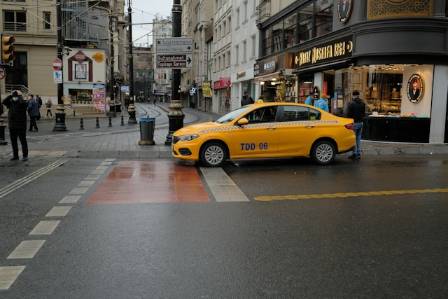
If you’ve ever wondered why so many taxis share the same bright yellow shade, you’re not alone. What might seem like a random choice is actually rooted in science, history, and clever marketing. From New York City to countless capitals worldwide, the yellow cab has become an unmistakable urban symbol. Here are six reasons behind this iconic color.
Diana
Wire note
Signal tip
The full dispatch write-up continues below on the discovery terminal.
Channel
Discovery Wire
If you’ve ever wondered why so many taxis share the same bright yellow shade, you’re not alone. What might seem like a random choice is actually rooted in science, history, and clever marketing. From New York City to countless capitals worldwide, the yellow cab has become an unmistakable urban symbol. Here are six reasons behind this iconic color.
A Color That Stands Out
Back in the 1920s, entrepreneur John Hertz worked with researchers at the University of Chicago to identify the most visible color from a distance. The study revealed that yellow caught the human eye more effectively than other shades, making it easier for potential passengers to spot cabs on busy streets.
Regulation in New York
When the Great Depression hit, unlicensed drivers flooded the streets, creating chaos in urban transport. In response, Mayor Fiorello La Guardia enforced a law that required official taxis to be painted in a standardized color. Since Hertz’s company already had the largest fleet of yellow vehicles, this bright hue became the standard for legitimate cabs in New York—and eventually, the world.
Harry Allen’s Innovation
The first organized taxi company in the United States dates back to 1907, when businessman Harry N. Allen grew tired of overcharged fares. He imported 65 French gasoline-powered cars, painted them a striking yellow, and introduced taximeters to ensure fair pricing. Allen also required his drivers to follow service rules and etiquette, creating a model for professional taxi operations.
Checker Cabs and Practical Design
By the 1920s, Russian immigrant Morris Markin revolutionized the business with the Checker Cab Manufacturing Company. His vehicles were built specifically for taxi service, featuring details like tall roofs so men could ride without removing hats and trunks spacious enough for baby carriages. The famous yellow Checkers, with their black checkered stripes, soon dominated New York’s streets.
The Era of the Crown Victoria
In 1991, the Ford Crown Victoria took over as the workhorse of New York taxis. Originally developed as a police car, it became popular for its durability, roomy back seat, and large trunk. Though considered outdated in the 1990s, its reliability and affordability kept it on the streets until production ended in 2011, after nearly 10 million units were built.
The Future Still Looks Yellow
Today, newer models like the Nissan NV200 have begun to replace older fleets. Yet despite changing technology, hybrid engines, and stricter environmental standards, one thing has remained consistent: the color. Yellow has become so synonymous with taxis that it is unlikely to disappear from cityscapes anytime soon.
Conclusion
The story of yellow taxis combines practicality, science, and tradition. From Harry Allen’s early innovations to Hertz’s marketing strategy and the dominance of Checker and Crown Victoria models, the bright color has ensured taxis remain both recognizable and reliable. While the vehicles may evolve, the yellow cab will continue to stand as a global icon of urban life.
More on the wire
LOG · en

Astronaut Illustration
Using classical methods and a keen attention to detail, my traditional astronaut illustrations aim to capture the grandeur and solitude of space exploration while evoking a sense of nostalgia.
LOG · en

Elegant Outfit Ideas for Every Season and Occasion
Elegance is about more than just looking sophisticated, it’s about feeling confident in your own skin. When you slip into an elegant outfit, that sense of self-assurance often follows. What makes an outfit elegant can vary: it might be its simplicity, the quality of the fabric, or how perfectly it fits your body. Today, I’m excited to share a collection of elegant outfit ideas to inspire you to elevate your wardrobe. These looks prove that elegance doesn’t have to be complicated. It’s all about picking pieces that make you feel your best and there are ways to dress elegantly no matter the season or event. So, read on for some of my favorite elegant ensembles and essential pieces that belong in every elegant wardrobe.
LOG · en

Understanding the Complex Nature of Rabbits
Rabbits remain a popular choice for pet owners, yet they are frequently misunderstood. While they are fascinating and endearing creatures, their specific needs and biological behaviors are often overlooked. By debunking common myths and examining their true nature, owners can provide the high standard of care these animals require to thrive.
LOG · en

Sago Palm: The Ancient Plant That Isn’t Really a Palm
During a recent trip to the warm, sunny South, I had the opportunity to reacquaint myself with palm-like plants. Like many people from northern regions, my knowledge of palms is fairly limited. One plant, however, has always caught my attention: the Sago Palm. Although its appearance strongly suggests that it belongs to the palm family, it is actually much more closely related to pine trees.
LOG · en

Submersibles for Deep Sea Exploration
The terms submarine and submersible are both commonly used for underwater vehicles designed to operate beneath the ocean surface for purposes such as scientific research, observation, and exploration.
LOG · en

The Best Sailboats for the High Seas?
At the St. Petersburg Boat Show last month, I had the opportunity to attend a presentation by delivery skipper and author John Kretschmer about what he described as sailboats designed for serious ocean passages. While I have some hesitation about creating any definitive list of “ideal” boats, Kretschmer is particularly qualified to discuss this subject. He reviews boats for Sail Magazine, and his latest book, Sailing a Serious Ocean, reflects his extensive experience at sea.