Wire dispatch
Sea Surface Salinity
Sea Surface Salinity (SSS) is classified as an Essential Climate Variable (ECV), meaning it is a key measurement used to understand Earth’s climate system. It plays an important role in controlling ocean water density, which in turn drives global ocean circulation. It is also closely linked to the global water cycle and broader climate processes.
Lillian Ashcroft
Wire note
Signal tip
The full dispatch write-up continues below on the discovery terminal.
Channel
Discovery Wire
Sea Surface Salinity (SSS) is classified as an Essential Climate Variable (ECV), meaning it is a key measurement used to understand Earth’s climate system. It plays an important role in controlling ocean water density, which in turn drives global ocean circulation. It is also closely linked to the global water cycle and broader climate processes.
Satellite Observation of Ocean Salinity
Since 2010, satellite missions such as Soil Moisture and Ocean Salinity (SMOS), Aquarius, and Soil Moisture Active Passive (SMAP) have made it possible to observe sea surface salinity on a global scale with unprecedented detail. These systems can map salinity at spatial resolutions of about 40–150 km and revisit the same areas every 2–3 days.
This level of observation has no historical equivalent and has significantly improved understanding of how salinity changes relate to climate variability. It has helped scientists study phenomena such as El Niño–Southern Oscillation, the Indian Ocean Dipole, and the Madden–Julian Oscillation. It also reveals how ocean salinity interacts with the water cycle through processes like evaporation, rainfall, and river discharge.
Ocean Processes Revealed by Salinity Data
Satellite salinity data has also improved knowledge of many ocean dynamics. These include tropical instability waves, Rossby waves, mesoscale eddies, and the movement of salt through ocean currents. It also helps identify salinity fronts, freshwater plumes from rivers, cross-shelf exchanges, and the salty wake patterns left behind by tropical cyclones.
In addition, scientists are beginning to use salinity measurements to study ocean biogeochemistry, including how carbon dioxide is exchanged between the ocean and the atmosphere.
ESA Climate Change Initiative and CCI+SSS Project
Building on early research success, the European Space Agency (ESA) launched the Climate Change Initiative (CCI) Sea Surface Salinity project, known as CCI+SSS, covering the period from 2018 to 2025. The goal is to produce improved, well-calibrated global salinity datasets spanning 2010 to 2025.
This work combines data from multiple satellite L-band radiometers, and in some regions, C-band instruments are also used. The project brings together experts in satellite Earth observation, data validation, and climate variability research to maximize the scientific value of SMOS, SMAP, and Aquarius missions.
Climate-Focused Data and Scientific Applications
The CCI+SSS initiative is designed to deliver datasets suitable for climate research. These products include detailed information about accuracy and uncertainty, making them more reliable for scientific use.
The project also focuses on improving salinity retrieval algorithms and supporting climate studies that contribute to major international assessments such as those by the Intergovernmental Panel on Climate Change (IPCC). Overall, it highlights the importance of sea surface salinity in understanding climate behavior and supports research used by scientists, educators, environmental analysts, and policymakers.
Frequently Asked Questions
What does SSS mean?
SSS refers to Sea Surface Salinity, which describes the salt concentration in the upper layer of the ocean.
Where can SSS data be accessed?
Salinity datasets are available through the project’s data resources section, while additional sources can be found via related scientific data portals.
What is CCI?
CCI stands for Climate Change Initiative, a program created by the European Space Agency to improve long-term climate data records.
What is an ECV?
ECV means Essential Climate Variable, a set of key physical, chemical, and biological measurements used to monitor climate change.
What is ESA?
ESA is the European Space Agency, an intergovernmental organization responsible for Europe’s space exploration and Earth observation programs.
What does EO mean?
EO stands for Earth Observation, which refers to the collection of information about Earth’s physical, chemical, and biological systems using satellites and remote sensing technologies.

More on the wire
LOG · en

Remarkable Truths About Camels
Camels are extraordinary animals with a host of biological adaptations that allow them to thrive in some of the planet's most inhospitable environments. While they are often associated with desert travel, their true nature involves complex social structures and impressive physical capabilities. Understanding these creatures requires looking past common misconceptions to appreciate their unique evolutionary journey.
LOG · en
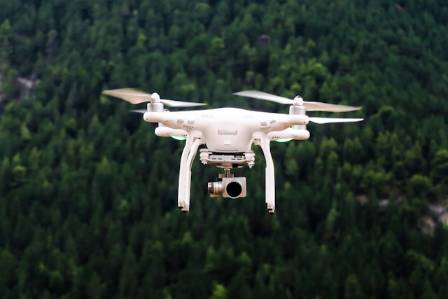
Essential Guidelines for Deploying Unmanned Aircraft in Public Infrastructure
Unmanned aircraft systems (UAS), commonly referred to as drones, have become transformative tools for municipal and government agencies nationwide. By providing access to high-risk or unreachable locations, these devices significantly reduce operational costs and time while enhancing personnel safety. Whether used for infrastructure inspections or geographic mapping, drones offer a level of efficiency that traditional methods cannot match. However, successfully integrating this technology requires a thorough understanding of the regulatory landscape and safety protocols.
LOG · en
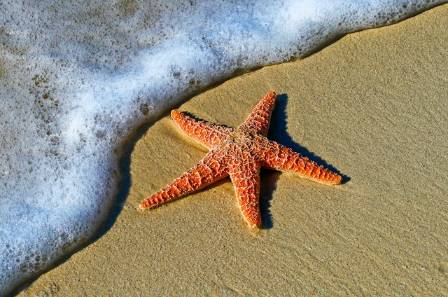
Amazing Starfish Facts
There are more than 2,000 known species of starfish, also called sea stars, living in oceans around the world. These unusual marine creatures come in an incredible variety of colours, shapes, and sizes, making them some of the most visually striking animals beneath the waves. Despite their simple appearance, starfish have a surprisingly complex and unique body structure. They have no brain or blood, yet they possess remarkable abilities, including digesting food outside their bodies.
LOG · en

A Bird Worth Getting to Know
When people think about animals considered vulnerable, familiar examples might include the magnificent Amur tiger or the powerful Indian rhinoceros. Both species continue to survive in part because of conservation work carried out by organizations such as the Wildlife Conservation Society. Protecting natural habitat is essential for the survival of threatened wildlife, including lesser-known but equally remarkable species such as Swinhoe’s pheasant (Lophura swinholi), a bird that deserves greater attention.
LOG · en
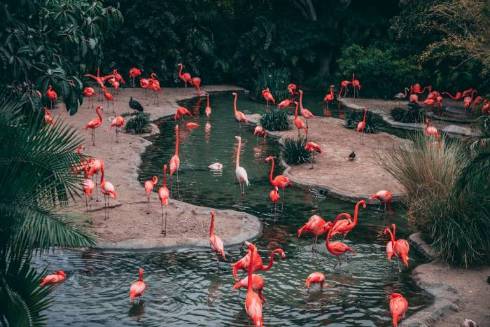
Flamingos' Sun-Fighting Beauty Routine: Keeping the Pink Alive
Greater flamingos aren't interested in sporting sun-faded neck feathers. In fact, they have a unique way of maintaining their vibrant pink plumage, which scientists have recently unveiled. These leggy birds, scientifically known as Phoenicopterus roseus, utilize a serum secreted by glands near their tails to both enhance and safeguard their feathery hues against the sun's bleaching effect. It's not just about looking pretty; flamingos' feathers play critical roles in flying, staying dry, and attracting mates.
LOG · en

Draw Cartoon Animals
who doesn’t enjoy cartoons? there are countless beloved cartoon characters that bring joy to both kids and adults, with something to match every taste and age.