Wire dispatch
An Introduction to the Hoopoe: Nature's Crowned Aviator
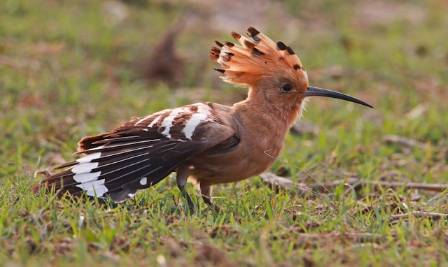
The Hoopoe (Upupa epops) is a remarkably vibrant bird found throughout Afro-Eurasia. It is most famous for its distinctive "crown" of feathers, an ornate crest that it can raise or lower at will.
Logan Matthew Turner
Wire note
Signal tip
The full dispatch write-up continues below on the discovery terminal.
Channel
Discovery Wire
The Hoopoe (Upupa epops) is a remarkably vibrant bird found throughout Afro-Eurasia. It is most famous for its distinctive "crown" of feathers, an ornate crest that it can raise or lower at will.
As the sole living representative of the Upupidae family, the Hoopoe holds a unique place in the avian world. While a larger relative, the Giant Hoopoe, once lived on Saint Helena, it has unfortunately gone extinct. The bird’s name is derived from the Latin word upupa, an onomatopoeia that mimics its soft, repetitive vocalization.
Taxonomic Classification and Diversity
The Hoopoe is part of the Coraciiformes order, a diverse group of birds that includes kingfishers, bee-eaters, and rollers. Extensive scientific research suggests they are the closest relatives to woodhoopoes, sharing specialized anatomical features such as a unique ear bone structure.
Currently, experts recognize nine distinct subspecies of Hoopoes. These variations are primarily distinguished by their physical dimensions and the specific intensity of their plumage colors, with some subspecies appearing larger or more vividly hued than others.
Global Distribution and Habitat
Hoopoes occupy a vast geographical range that encompasses Europe, Asia, and most of Africa, including Madagascar. Their migratory patterns vary by region; those residing in Europe and northern Asia travel to warmer southern climates during the winter months, whereas African populations typically remain in their territories year-round.
These birds are highly adaptable and can be found in a variety of environments, from savannas and grasslands to forest clearings and even man-made landscapes like orchards and olive groves. They require two essential elements for a home: open ground with minimal vegetation for foraging and vertical structures—such as trees, cliffs, or walls—containing cavities for nesting.
Foraging and Dietary Preferences
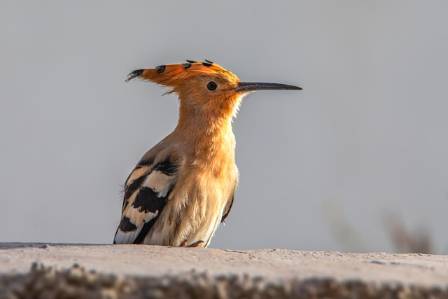
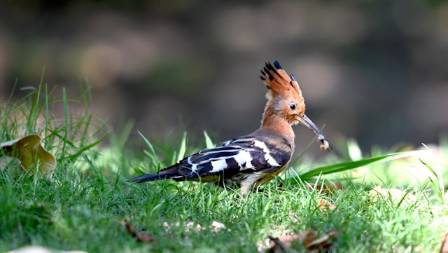
The Hoopoe is primarily an insectivore. Its diet consists largely of crickets, beetles, ants, and grasshoppers, though it occasionally consumes small frogs, reptiles, or plant matter like seeds. Using its long, curved beak, the bird probes the soil to extract larvae or pupae hidden beneath the surface.
If a piece of prey is particularly large or difficult to manage, the Hoopoe will strike it against a hard surface, such as a rock. This behavior serves to kill the insect and remove indigestible parts like legs or wings before consumption. While they usually forage solo on the ground, their strong, rounded wings also allow them to snatch insects mid-flight.
Behavioral Traits and Defense Mechanisms
Hoopoes have several interesting daily habits. They are fond of sunbathing, a process where they flatten their bodies against the ground and spread their wings to soak up heat. They also engage in dust bathing to maintain their feathers.
When it comes to protection, the Hoopoe has developed some truly unique—and pungent—defenses. During the nesting period, females and their chicks produce a liquid that smells like rotting meat. They preen this secretion into their feathers to discourage predators and prevent bacterial growth. Additionally, young chicks can defend themselves by spraying waste at intruders or making hissing sounds to mimic snakes.
Breeding and Life Cycle
Hoopoes are generally monogamous during the breeding season and are fiercely territorial. Males will use their calls to mark their domain and may engage in physical combat, using their beaks as weapons to drive away rivals.
Nests are built in holes with narrow entrances to keep the occupants safe. The number of eggs laid depends on the latitude; birds in cooler northern regions may lay up to twelve eggs, while those in tropical climates usually lay about four. The female is responsible for incubating the eggs, which take about 15 to 18 days to hatch.
Once the chicks arrive, they are covered in soft down. Both parents eventually share the responsibility of bringing food to the nest. The young birds are ready to fly within 26 to 29 days and typically stay with their parents for an additional week before becoming fully independent.
More on the wire
LOG · en

Submersibles for Deep Sea Exploration
The terms submarine and submersible are both commonly used for underwater vehicles designed to operate beneath the ocean surface for purposes such as scientific research, observation, and exploration.
LOG · en
Seven Intriguing Realities of the Gorilla
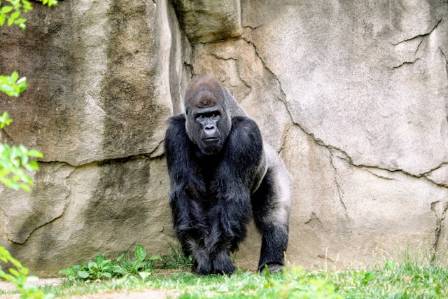
Often described as gentle giants, gorillas hold the distinction of being the planet's largest primates. These magnificent creatures are remarkably close to humans, sharing approximately 98% of our genetic makeup. Within the species, there are four recognized subgroups: the mountain, cross river, eastern lowland, and western lowland gorilla. Currently, the western lowland variety is the most widespread but remains critically endangered, with an estimated wild population of only 300,000. These primates are celebrated for their immense power, impressive physical stature, and highly sophisticated social lives.
LOG · en

The Ever-Turning Wheel: Key Bike Trends for 2026
The bicycle is undergoing its most significant transformation since the invention of the safety frame. In 2026, the industry is mastering a delicate balancing act: integrating cutting-edge technology while preserving the pure, analogue joy of riding. It’s a landscape defined by electrification, intelligent connectivity, and a renewed obsession with clean aesthetics and practical utility. Here is an in-depth look at the trends steering the future of cycling.
LOG · en

The Most Enigmatic Torch: Reframing the Statue of Liberty
Since its dedication, the Statue of Liberty has stood as more than a colossal sculpture. It has become a symbol of the friction between national independence and universal human rights, a beacon that sparks debate about who belongs and who is welcomed. This essay revisits the monument’s birth, its inaugural moment in New York, and the layered meanings that have energized public memory for well over a century.
LOG · en

Watercolour florals for beginners
Painting floral subjects in watercolor fits beautifully with a modern, loose painting approach. This style encourages freedom in brushwork and takes full advantage of watercolor’s natural ability to blend and flow. Flowers were the very first subject I wanted to paint as a beginner, and they’ve remained one of my favorite themes ever since.
LOG · en

The Science of Cookies: Baking the Perfect Batch
Cookies may seem like simple treats, but their texture, flavor, and structure are shaped by precise scientific processes. From the interaction of ingredients to the chemical reactions in the oven, understanding the science behind cookie baking is the key to crafting your ideal batch—whether chewy, crispy, or cakelike. Below, we break down the critical factors that influence cookie success, from baking steps to ingredient choices.