Wire dispatch
Tree Frogs: A Diverse Group of Climbing Amphibians
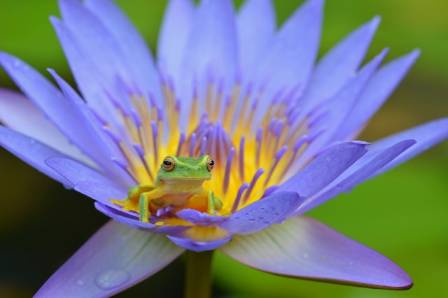
Tree frogs are a highly varied group of amphibians with more than 800 known species around the world. Although their name suggests that they all spend their lives in trees, this is not always true. The characteristic that connects tree frogs is actually related to their feet. The final bone in each toe, known as the terminal phalanx, has a claw-like shape. Many species also have specialized toe pads that help them grip surfaces while climbing, along with additional bone structures that improve their ability to move through vegetation.
Caroline Baker
Wire note
Signal tip
The full dispatch write-up continues below on the discovery terminal.
Channel
Discovery Wire
Tree frogs are a highly varied group of amphibians with more than 800 known species around the world. Although their name suggests that they all spend their lives in trees, this is not always true. The characteristic that connects tree frogs is actually related to their feet. The final bone in each toe, known as the terminal phalanx, has a claw-like shape. Many species also have specialized toe pads that help them grip surfaces while climbing, along with additional bone structures that improve their ability to move through vegetation.
Tree frogs come in many different colors, but species found in the United States are most commonly green, gray, or brown. Some species have remarkable color-changing abilities, such as the squirrel tree frog (Hyla squirella), which can adjust its appearance to better match its surroundings.
Size and Physical Features
Tree frogs vary greatly in size, but most species that live in trees are relatively small because they depend on leaves and thin branches for support. The largest known tree frog is the white-lipped tree frog (Litoria infrafrenata), found in Australia and Oceania, which can reach lengths of 4 to 5.5 inches (10 to 14 centimeters).
In the United States, the largest tree frog is the introduced Cuban tree frog, which can grow between 1.5 and 5 inches (3.8 to 12.7 centimeters) long. At the opposite end of the scale, some of the world’s smallest tree frogs measure less than one inch (2.5 centimeters) in length.
Global Distribution and Habitats
Tree frogs can be found on every continent except Antarctica, with the greatest variety occurring in tropical regions of the Western Hemisphere. Around 30 species are found in the United States, while more than 600 species inhabit Central and South America.
Many tree frogs are adapted for life above the ground. Their sticky toe pads, strong legs, and climbing abilities allow them to move easily through trees and plants. However, not every tree frog lives in the canopy. Some species prefer environments near ponds, lakes, or damp vegetation close to the ground.
Tree frogs are prey for many types of animals, including mammals, birds, reptiles, and fish. To survive, many species rely on camouflage to blend into their surroundings. Those that spend most of their time in trees can avoid many ground-based predators by remaining hidden among branches and leaves.
Feeding Habits
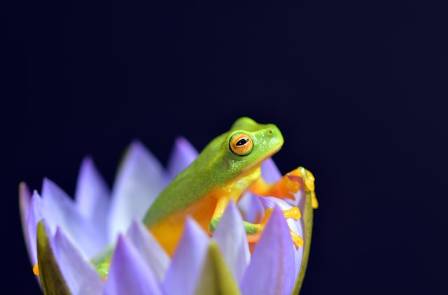
Adult tree frogs are primarily insect-eaters. Their diet consists mainly of small invertebrates such as flies, ants, crickets, beetles, moths, and other insects.
During their tadpole stage, however, most tree frogs have a very different diet. Young tadpoles are usually herbivorous and feed mainly on plant material and algae before transforming into adults.
Mating and Life Cycle
Male tree frogs usually attract females by producing special calling sounds. Each species has its own unique call, allowing females to identify males of the same species. One of the most recognizable frog sounds, the famous “ribbet” call, comes from the Baja California tree frog (Pseudacris hypochondriaca). This familiar sound has been widely used in outdoor scenes in movies, even in places where the species does not naturally occur.
After mating, most tree frogs begin life as tadpoles that hatch from eggs laid in water. As they develop, tadpoles gradually lose their tails and grow legs until they become fully formed adult frogs. Some species hatch directly as tiny versions of adults, but this is less common.
The lifespan of tree frogs differs greatly between species. Some, like the Australian green tree frog (Litoria caerulea), can live for more than 15 years in captivity. Other species survive less than three years and are considered short-lived. North American gray tree frogs, including Hyla versicolor and Hyla chrysoscelis, typically have a medium lifespan of around five to nine years.
Conservation Challenges
Amphibians around the world are experiencing serious population declines and are among the animal groups most vulnerable to extinction. Because frogs absorb oxygen and water through their skin, they are highly sensitive to environmental changes.
Tree frogs face many threats, including habitat destruction, pollution, climate change, and infectious diseases such as chytridiomycosis. Protecting wetlands, forests, and other natural habitats is essential for maintaining healthy tree frog populations.
Interesting Fact About Tree Frogs
Although the name suggests otherwise, not every member of the tree frog family Hylidae lives in trees. Likewise, not every frog that climbs or lives in trees belongs to the true tree frog family. Their name describes a lifestyle commonly associated with them, but their diversity is much broader than many people realize.
More on the wire
LOG · en

Unlocking the Therapeutic Wonders of Seaside Serenity
When the radiant sun graces the sky and warmth embraces the atmosphere, the beach beckons as an irresistible haven for many. But what exactly renders the beach an extraordinary sanctuary for mental well-being? In three simple words—water, sun, and air. These elemental forces weave a tapestry of mental health benefits, creating a space for relaxation and fostering social connections.
LOG · en

Desert Pavement: A Unique Wind-Formed Landscape
Aeolian landforms are natural features created by the action of wind on the Earth’s surface. These formations result from processes such as erosion, transportation, and the deposition of materials by moving air. Similar wind-related processes have also been observed and studied on other planets.
LOG · en

Curb Sales of SUVs: Mitigating Health and Environmental Harms
Once a specialized option for offroad driving, Sports Utility Vehicles (SUVs) have evolved into a dominant force in the global automotive market. Their rise has been nothing short of remarkable: globally, SUVs now account for half of all new car sales, a stark jump from just 15% in 2010. The UK market reflects this trend even more acutely, with SUVs making up 63% of new car sales in 2024 compared to a mere 12% over a decade earlier. This proliferation is not an isolated phenomenon but part of a broader "carspreading" trend, where vehicles have steadily grown larger in dimensions—taller, wider, and heavier—over time. As Dr. Anthony Laverty and his colleagues highlight in The BMJ’s climate issue, this expansion brings with it significant, yet often overlooked, risks to public health and the environment, demanding urgent action at local, national, and international levels.
LOG · en
Fascinating Insights into the World of Antelopes
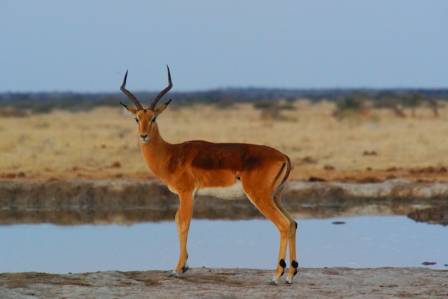
Antelopes are a diverse group of mammals with nearly 100 distinct species identified globally. While the vast majority inhabit the expansive African savannahs, these resilient creatures have adapted to a remarkable range of environments. They can be found in dense forests, thick brush, rugged rocky terrain, arid deserts, and even water-saturated marshlands. Social by nature, antelopes typically live in groups referred to as herds.
LOG · en

The Grand Entrance: 22 Striking Foyer Ideas to Captivate from the First Step
Your entryway is more than a threshold—it’s the opening line of your home’s story. It sets the tone, offers the first hint of your aesthetic, and welcomes guests with either polished poise or rustic charm. Whether your style is modern, traditional, or mid-century, a well-designed foyer balances breathtaking beauty with everyday function. From dramatic art to vintage rugs, and from clever storage to dedicated drop zones for shoes and umbrellas, the possibilities are endless. Here are 22 of our favorite ideas to inspire a space that maximizes both style and square footage.
LOG · en

Five Potential Health Benefits of Lotus
The lotus plant is an aquatic species available in various colors. Its leaves, petals, and seeds can be prepared and eaten in multiple ways. Consuming lotus may provide certain health advantages.