Wire dispatch
AI Guides Drones in Uncertain Environments
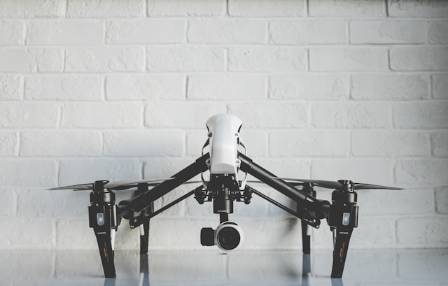
An autonomous drone tasked with dropping water to fight a wildfire in the Sierra Nevada could face powerful, shifting Santa Ana winds that push it off its intended path. Adjusting to these unpredictable disturbances in real time is a major challenge for any flight control system.
Casey Riley
Wire note
Signal tip
The full dispatch write-up continues below on the discovery terminal.
Channel
Discovery Wire
An autonomous drone tasked with dropping water to fight a wildfire in the Sierra Nevada could face powerful, shifting Santa Ana winds that push it off its intended path. Adjusting to these unpredictable disturbances in real time is a major challenge for any flight control system.
To address this, researchers at MIT have created a new adaptive control method powered by machine learning. This system helps drones remain on course by reducing deviations from their planned trajectory, even when facing unstable conditions like strong wind gusts.
Unlike traditional control methods, this approach does not require prior knowledge of the disturbances the drone may encounter. Instead, the system’s AI model learns directly from a small dataset—just 15 minutes of flight observations—to understand and respond to environmental forces.
A key advantage of this method is its ability to automatically choose the most suitable optimization algorithm for the situation. By selecting the best approach based on the nature of the disturbance, the system improves its tracking accuracy.
The researchers achieve this through meta-learning, a technique that trains the system to adapt to a variety of conditions. This allows the controller to learn both how to model disturbances and how to respond to them at the same time.
As a result, the new control system reduces trajectory tracking errors by up to 50% compared to standard methods in simulations, and it performs well even under wind conditions it has not previously encountered.
In the future, this technology could enable drones to deliver heavy packages more reliably in windy environments or monitor wildfire-prone regions more effectively.
“The strength of our method comes from learning multiple components together,” explains Navid Azizan, senior author of the study and a professor at MIT. “With meta-learning, the system can quickly determine the best way to adapt.”
The research team also includes lead author Sunbochen Tang and co-author Haoyuan Sun. Their work was recently presented at the Learning for Dynamics and Control Conference.
Choosing the Right Algorithm
Typically, drone control systems rely on predefined models that describe both the drone and its environment, including assumptions about possible disturbances. However, in real-world scenarios, these conditions are often too complex to predict in advance.
Many systems use an optimization method called gradient descent to estimate unknown variables and maintain stability. However, gradient descent is just one option within a broader class known as mirror descent methods.
“Mirror descent includes a range of algorithms, and some are better suited to specific problems than others,” Azizan explains. “Our system automatically determines which one works best.”
To do this, the researchers replaced traditional disturbance models with a neural network that learns directly from data. This removes the need to predefine how wind or other forces behave.
At the same time, the system evaluates multiple mirror-descent functions and selects the one that best fits the current situation, improving overall performance.
Learning to Adapt
Although wind conditions may vary from flight to flight, the system’s learned components—its neural network and optimization strategy—remain consistent, avoiding the need for retraining each time.
To make the controller adaptable, the team used meta-learning to expose it to a wide range of simulated wind scenarios during training. This helps the system develop a generalized understanding of different disturbance patterns.
“Our approach builds a shared representation across many scenarios, allowing efficient adaptation,” Tang explains.
During operation, the user simply inputs a desired flight path. The system then continuously adjusts the drone’s thrust in real time to keep it as close as possible to that path, even as conditions change.
Tests in both simulations and real-world experiments showed that this method significantly outperformed existing approaches across all tested wind conditions.
“Even when the system encounters stronger disturbances than those seen during training, it still performs effectively,” Azizan notes.
Interestingly, the performance gap between this method and traditional systems increases as wind intensity rises, highlighting its strength in challenging environments.
Future Directions
The research team is now testing the system on physical drones under varying environmental conditions. They also plan to expand its capabilities to handle multiple simultaneous disturbances.
For example, shifting winds could cause a drone’s payload to move during flight—especially if it is carrying liquids—introducing additional instability.
Another goal is to incorporate continuous learning, enabling the system to adapt to new conditions without retraining on previous data.
Babak Hassibi, a professor at Caltech who was not involved in the study, praised the work:
“This research combines meta-learning with traditional adaptive control in a powerful way. The use of mirror descent allows the system to automatically align with the problem’s structure, making it highly effective for complex, uncertain environments.”
This project received support from organizations including MathWorks, the MIT-IBM Watson AI Lab, the MIT-Amazon Science Hub, and the MIT-Google Program for Computing Innovation.
More on the wire
LOG · en

Scented Sachet Do's and Don'ts
Scented sachets have been used for hundreds of years. Some of the earliest examples appeared in medieval Europe, when people filled small fragrance pouches to freshen linens and help mask unwanted smells. Although the materials and designs have changed over time, the basic purpose remains unchanged: sachets provide an easy, passive method for keeping enclosed areas pleasantly scented.
LOG · en
Flamingo Conservation & Research: Status, Protection, and Captive Breeding
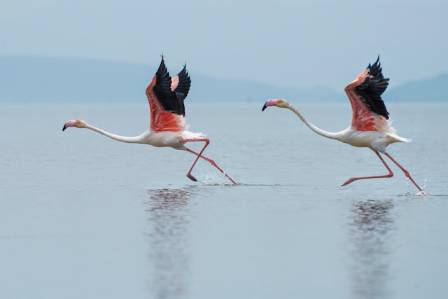
Flamingos, with their striking plumage and iconic stature, have long been a focus of conservation efforts due to their unique ecological roles and varying population threats. From once being declared extinct to thriving in captive settings, their conservation journey involves international agreements, regional regulations, and collaborative work by zoological institutions. This article outlines the protection status, regulatory frameworks, and successful captive breeding initiatives that safeguard flamingo species worldwide.
LOG · en

Silk Secrets: Insider Tips for Styling Luxurious Silk
Master the elegance of silk with expert guidance. Discover how to combine textures, experiment with draping, and care for your silk pieces. Transform your outfits with fashion’s most cherished fabric.
LOG · en

Mastering Star Trail Photography: A Comprehensive Guide
Capturing the celestial dance of stars through long exposure techniques transforms a starry night into a mesmerizing spectacle. Star trail photography unveils the beauty of diurnal circles, showcasing the apparent motion of stars as the Earth rotates on its axis. This guide explores the essential equipment, optimal camera settings, and expert tips to embark on a captivating journey into the realm of star trail photography.
LOG · en
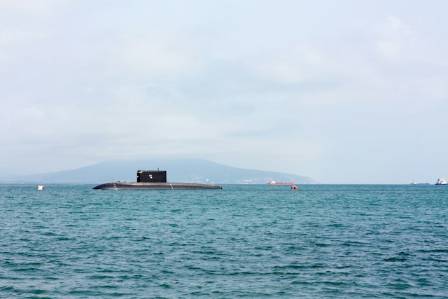
Submersibles for Deep Sea Exploration
The terms submarine and submersible are both commonly used for underwater vehicles designed to operate beneath the ocean surface for purposes such as scientific research, observation, and exploration.
LOG · en

Hosta Plantaginea: A Shade Garden Favorite
Hosta plantaginea is a perennial flowering plant belonging to the Asparagaceae family and the Hosta genus. It is commonly known by names such as Plantain Lily, Fragrant Hosta, Jade Hairpin, White Crane Flower, and White Jade Lily.